
NAD+ Buffered
$115.00
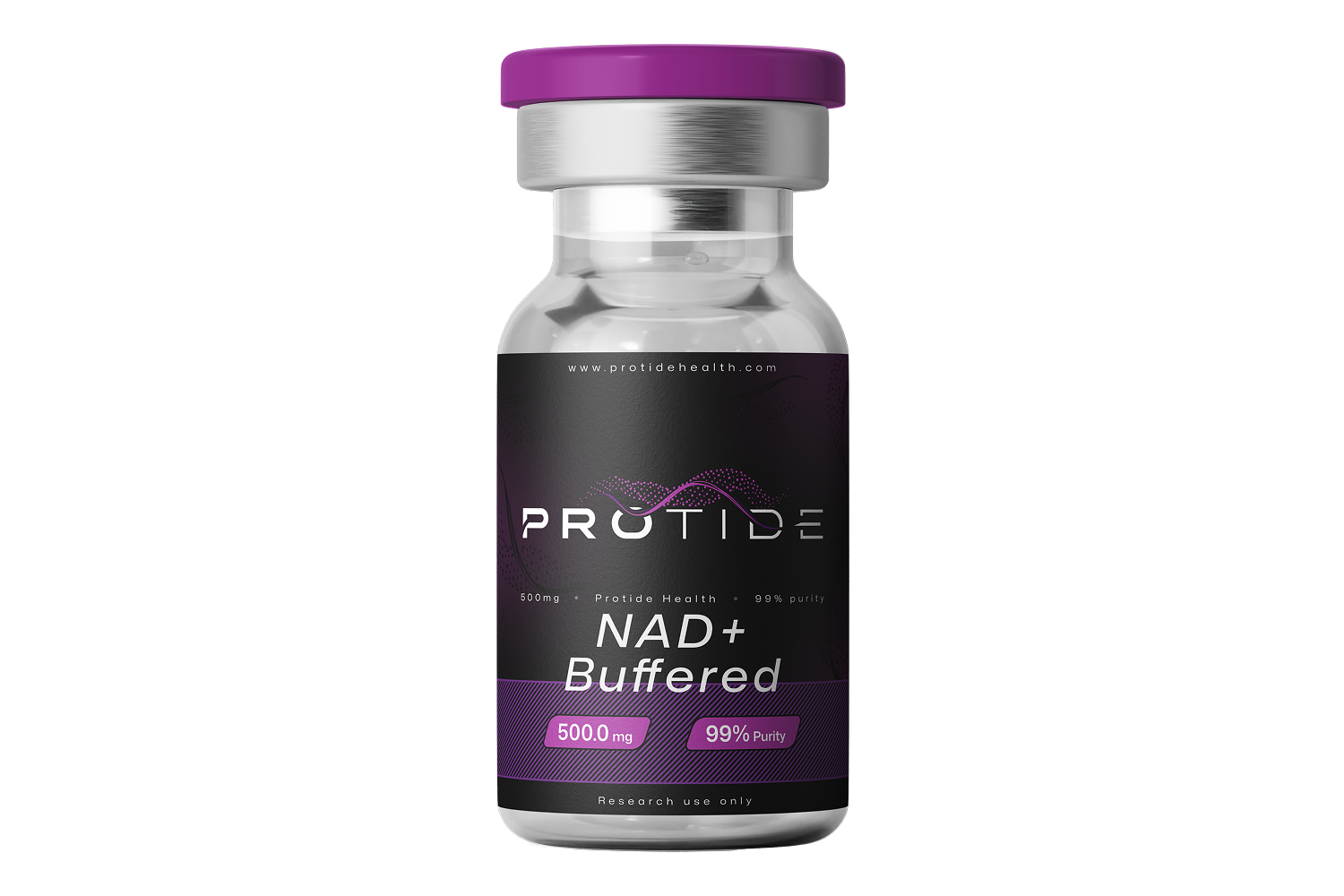
NAD+ buffered 500mg product shot featuring a professionally labeled Protide Health 3mL research vial containing white to off-white lyophilized β-NAD+ powder, with the 500mg strength and buffered research formulation clearly identified against a clean laboratory-style background with research-use-only labeling.


NAD+ Buffered 500mg – Protide Health USA
NAD+ Buffered Overview & Technical Specifications
NAD+ buffered refers to β-nicotinamide adenine dinucleotide supplied in a pH-buffered lyophilized research formulation.
NAD+ is not a peptide. It is a dinucleotide coenzyme composed of two ribonucleotides connected through their phosphate groups, one containing adenine and the other containing nicotinamide.
The supplied NAD+ PubChem chemical record identifies β-NAD+ as PubChem CID 10897651, CAS 53-84-9, molecular formula C21H27N7O14P2, and molecular weight approximately 663.43 g/mol.
Protide Health supplies NAD+ buffered as 500mg of 99% purity lyophilized material for controlled biochemical, enzymatic, cellular, analytical, and qualified preclinical research.
Technical Specifications
- Product Name: NAD+ Buffered
- Chemical Name: β-Nicotinamide Adenine Dinucleotide
- Quantity: 500mg
- Form: Lyophilized powder
- Vial Size: 3mL
- Purity: 99%
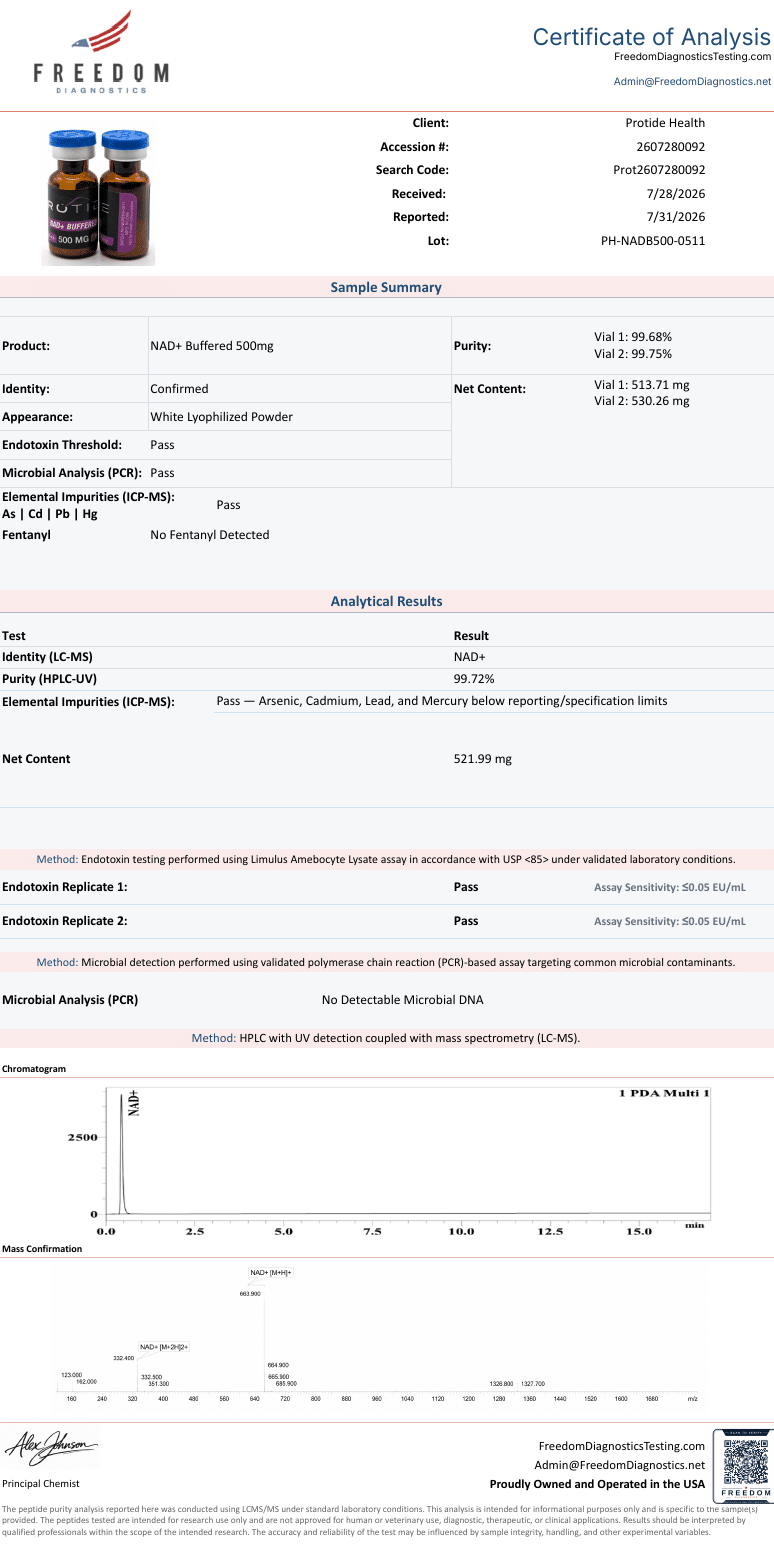
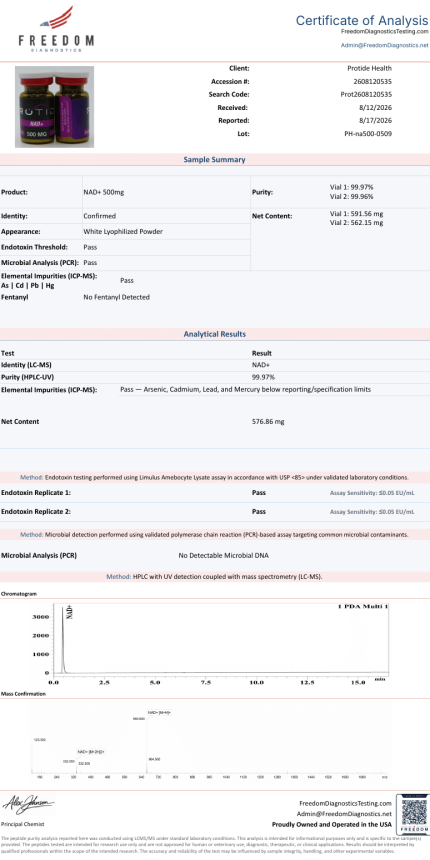
- Testing: HPLC verified; third-party tested
- Compound Class: Pyridine dinucleotide coenzyme
- CAS Number: 53-84-9
- PubChem CID: 10897651
- Molecular Formula: C21H27N7O14P2
- Molecular Weight: 663.43 g/mol
- Appearance: White to off-white lyophilized powder
- Formulation: pH-buffered research formulation
- Storage: Store sealed at ≤6°C and protected from heat, light, and moisture
- Research Use: Biochemical, enzymatic, cellular, metabolic, analytical, and preclinical investigation only
NAD+ Buffered Mechanism & Research Context
The central biochemical role of NAD+ buffered material derives from the function of NAD+ as an electron-transfer cofactor and enzyme substrate.
In redox reactions, NAD+ can accept a hydride equivalent and become NADH. This reversible NAD+/NADH cycling is fundamental to a wide range of metabolic pathways.
Researchers commonly study NAD+ in relation to:
- Glycolytic reactions
- Tricarboxylic acid cycle metabolism
- Oxidative phosphorylation
- Lactate dehydrogenase systems
- Malate dehydrogenase systems
- Cellular redox state
- Mitochondrial metabolism
- NAD-consuming enzyme systems
Beyond redox chemistry, NAD+ also acts as a substrate for enzymes including sirtuins, poly(ADP-ribose) polymerases, CD38-associated enzymes, and other NAD-dependent signaling systems.
Researchers can review broader NAD+ research indexed by PubMed for peer-reviewed literature covering NAD metabolism, redox biology, sirtuins, PARPs, mitochondrial signaling, and cellular bioenergetics.
Biochemical Research Applications
NAD+/NADH Redox Research
A foundational use of NAD+ buffered material is the study of oxidation-reduction reactions.
NAD+ accepts electrons during many dehydrogenase-catalyzed reactions to form NADH. NADH can subsequently participate in additional enzymatic and mitochondrial electron-transfer processes.
The NAD+/NADH ratio is therefore frequently investigated as a biochemical indicator of cellular redox conditions.
Research endpoints may include:
- NAD+ concentrations
- NADH concentrations
- NAD+/NADH ratios
- Dehydrogenase activity
- Mitochondrial respiration
- Cellular ATP-associated metabolism
- Metabolic flux
These measurements are laboratory endpoints and should not be converted into human therapeutic claims.
Dehydrogenase Enzyme Research
Many oxidoreductases require NAD+ or NADH as cofactors.
Examples include enzymes involved in:
- Lactate metabolism
- Malate metabolism
- Alcohol metabolism
- Aldehyde metabolism
- Glyceraldehyde-3-phosphate metabolism
- Amino-acid metabolism
This makes buffered NAD+ relevant to enzyme kinetics, cofactor-dependence, substrate turnover, and metabolic pathway research.
Sirtuin Research
Sirtuins are NAD-dependent deacylase enzymes.
Their catalytic activity requires NAD+, linking cellular NAD availability to experimental research on protein deacetylation, metabolic regulation, transcriptional signaling, mitochondrial biology, and stress-response pathways.
Laboratory systems may investigate relationships among NAD concentrations, sirtuin activity, target-protein modification, and metabolic state.
Such findings describe biochemical mechanisms rather than demonstrating anti-aging or therapeutic effects of a research product.
PARP and DNA-Damage Signaling Research
Poly(ADP-ribose) polymerases use NAD+ as a substrate during ADP-ribosylation reactions.
PARP activity has been widely studied in the context of:
- DNA-damage responses
- Chromatin biology
- Cellular stress
- NAD consumption
- Metabolic consequences of DNA repair activity
The use of NAD+ by PARPs illustrates why cellular NAD metabolism integrates redox biochemistry with broader signaling pathways.
CD38 and NAD Metabolism
CD38 is another important NAD-consuming enzyme.
Experimental work has examined CD38-mediated NAD metabolism in relation to cellular signaling, immune biology, aging models, and metabolic regulation.
This provides another research pathway where NAD+ buffered material may be relevant to controlled biochemical assays.
What Is Buffered NAD+?
Researchers asking what is buffered NAD+ are generally referring to NAD+ supplied in a formulation containing buffering components intended to control solution pH.
Buffering does not transform NAD+ into a different peptide or coenzyme.
Instead, the term describes the formulation environment in which the NAD+ research material is supplied.
Solution pH can influence the stability and performance of biochemical reagents. The exact effect depends on buffer composition, pH, temperature, concentration, handling, and other experimental conditions.
For this product, Protide Health describes it specifically as a pH-buffered NAD+ research formulation.
What Is NAD+ Buffered?
The phrase what is NAD+ buffered refers to the same formulation concept: β-NAD+ supplied with a buffering system rather than an entirely different molecular species.
The active research compound remains nicotinamide adenine dinucleotide.
Researchers should distinguish between:
- Chemical identity of NAD+
- Buffer composition
- Solution pH
- Product concentration
- Storage conditions
- Experimental assay conditions
These variables can independently influence laboratory results.
NAD+ Buffered Peptide: Important Classification Note
The search phrase nad+ buffered peptide is chemically inaccurate.
NAD+ is not a peptide because it is not composed of an amino-acid chain joined by peptide bonds.
Instead, NAD+ is a pyridine dinucleotide coenzyme.
This distinction matters for scientific accuracy because NAD+ participates in redox and enzyme-substrate chemistry that differs fundamentally from peptide receptor signaling.
Protide Health therefore classifies NAD+ buffered as a biochemical research compound rather than a peptide.
NAD+ and Cellular Bioenergetics Research
NAD+ and NADH participate in biochemical pathways central to energy metabolism.
Research frequently examines NAD redox cycling alongside:
- Glycolysis
- Pyruvate metabolism
- TCA-cycle activity
- Mitochondrial electron transport
- Fatty-acid metabolism
- Amino-acid metabolism
Changes in NAD availability may alter experimental metabolic flux, but outcomes depend heavily on cell type, experimental model, enzyme expression, nutrient environment, and assay design.
NAD+ Metabolism and Cellular Signaling
NAD+ serves both as a redox cofactor and a consumed substrate.
This dual role makes NAD metabolism relevant to multiple experimental pathways.
NAD-consuming enzymes can release or transform the nicotinamide portion of the molecule, creating links between NAD turnover and salvage pathways that regenerate NAD+.
Researchers commonly investigate enzymes such as:
- NAMPT
- NMNAT
- Sirtuins
- PARPs
- CD38
These systems provide a framework for studying NAD homeostasis at the molecular level.
NAD+ Buffered Dosage Searches and Laboratory Use
The phrase nad+ buffered dosage generally relates to human-use administration questions and does not apply to this research material.
The stated 500mg quantity identifies the amount of laboratory compound supplied in the vial. It is not a recommended human dose.
Protide Health does not provide injection protocols, infusion instructions, dosing schedules, treatment cycles, or other administration guidance.
Research Format and Storage
Protide Health supplies NAD+ buffered as a white to off-white lyophilized powder in a 3mL vial.
The product specification describes the formulation as pH buffered.
According to the supplied specifications, unopened material should be:
- Stored at ≤6°C
- Kept sealed
- Protected from heat
- Protected from direct light
- Protected from moisture
Researchers should use appropriate laboratory controls when evaluating buffer effects because buffer composition and pH may influence enzyme activity and assay behavior independently of NAD+ itself.
Research Limitations
Research involving NAD+ spans fundamental biochemistry, cultured cells, animal systems, and clinical research.
Important limitations include:
- Cellular NAD metabolism differs substantially among tissues and experimental models.
- Changes in NAD concentration do not establish therapeutic outcomes.
- In-vitro biochemical results cannot automatically be extrapolated to intact organisms.
- Animal findings cannot establish equivalent human effects.
- Evidence involving NAD precursors such as NR or NMN should not automatically be applied to direct NAD+.
- Findings involving human pharmaceutical or infusion preparations do not establish safety or efficacy for laboratory material.
- Buffer formulation can affect assay behavior independently of NAD+.
- The product is a coenzyme, not a peptide.
Protide Health therefore supplies NAD+ buffered strictly for qualified laboratory experimentation.
Literature & Citation Index
NAD+ Metabolism and Its Roles in Cellular Processes During Ageing
Journal: Nature Reviews Molecular Cell Biology
Research Context: NAD synthesis, consumption, redox metabolism, sirtuins, PARPs, CD38, and cellular signaling.
NAD+ in Aging: Molecular Mechanisms and Translational Implications
Research Context: NAD metabolism, cellular energetics, DNA-damage signaling, mitochondrial pathways, and NAD-consuming enzymes.
Sirtuins, NAD, and Metabolic Regulation
Research Context: NAD-dependent deacylase activity and links between NAD availability and metabolic signaling.
PARPs and NAD+ Metabolism
Research Context: NAD consumption during ADP-ribosylation, DNA-damage responses, and cellular metabolic regulation.
CD38 and NAD Metabolism
Research Context: NAD degradation, CD38-associated signaling, and regulation of cellular NAD pools.
Related Protide Health Research Products
Researchers examining small-molecule metabolic research can review 5-Amino-1MQ for a chemically distinct research compound associated with NNMT-focused biochemical investigation.
The standard NAD+ research product provides a related NAD formulation for comparison with the buffered research material.
Researchers may also examine Glutathione research material when studying redox-associated biochemical pathways involving a chemically distinct tripeptide.
These materials differ in structure, biochemical role, and experimental application and should not be considered interchangeable.
Frequently Asked Questions
What is NAD+ Buffered?
NAD+ buffered is β-nicotinamide adenine dinucleotide supplied in a pH-buffered lyophilized research formulation.
Is NAD+ a peptide?
No. NAD+ is a pyridine dinucleotide coenzyme, not an amino-acid peptide.
What does NAD+ do in biochemical research?
NAD+ functions as an electron-accepting cofactor in many oxidation-reduction reactions and as a substrate for NAD-dependent enzymes including sirtuins, PARPs, and CD38-related systems.
What is the molecular formula of NAD+?
The supplied chemical identity has the molecular formula C21H27N7O14P2 and molecular weight 663.43 g/mol.
Why is this product buffered?
The supplied specification describes the formulation as pH buffered to support solution stability. Buffering controls the chemical environment rather than creating a different NAD molecule.
What does buffered NAD+ research examine?
Buffered NAD+ may be studied in enzyme assays, redox experiments, mitochondrial research, NAD-dependent signaling, metabolic pathway analysis, and cellular bioenergetics.
What purity does Protide Health specify?
The product specification states 99% purity, with HPLC verification and third-party testing.
What form is the product supplied in?
It is supplied as 500mg of white to off-white lyophilized powder in a 3mL vial.
Is NAD+ Buffered intended for human use?
No. It is supplied exclusively for biochemical analysis, enzyme research, in-vitro studies, metabolic research, analytical testing, and qualified preclinical experimentation.
Laboratory Terms & Compliance
Laboratory Research Use Only
This product is supplied exclusively for laboratory research, analytical testing, in-vitro studies, preclinical research, and qualified scientific experimentation.
It is not intended for human or veterinary consumption, medical use, diagnostic use, therapeutic use, infusion, anti-aging treatment, metabolic treatment, or clinical administration.
No human dosage, dosing, injection, infusion, administration, treatment schedule, or preparation instructions are provided.
The purchaser is responsible for appropriate laboratory handling, storage, and use in accordance with applicable institutional, federal, state, and local requirements.
For research use only.


MAECENAS IACULIS
Vestibulum curae torquent diam diam commodo parturient penatibus nunc dui adipiscing convallis bulum parturient suspendisse parturient a.Parturient in parturient scelerisque nibh lectus quam a natoque adipiscing a vestibulum hendrerit et pharetra fames nunc natoque dui.
ADIPISCING CONVALLIS BULUM
- Vestibulum penatibus nunc dui adipiscing convallis bulum parturient suspendisse.
- Abitur parturient praesent lectus quam a natoque adipiscing a vestibulum hendre.
- Diam parturient dictumst parturient scelerisque nibh lectus.
Scelerisque adipiscing bibendum sem vestibulum et in a a a purus lectus faucibus lobortis tincidunt purus lectus nisl class eros.Condimentum a et ullamcorper dictumst mus et tristique elementum nam inceptos hac parturient scelerisque vestibulum amet elit ut volutpat.
Related products
5-Amino 1-MQ
Price range: $45.00 through $110.00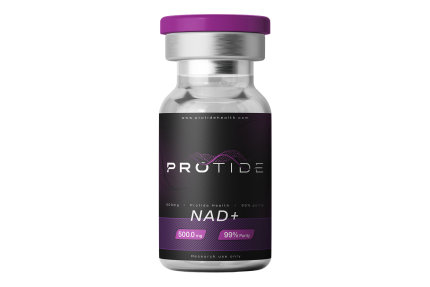
Reviews
There are no reviews yet.