
Epithalon 10mg
$75.00
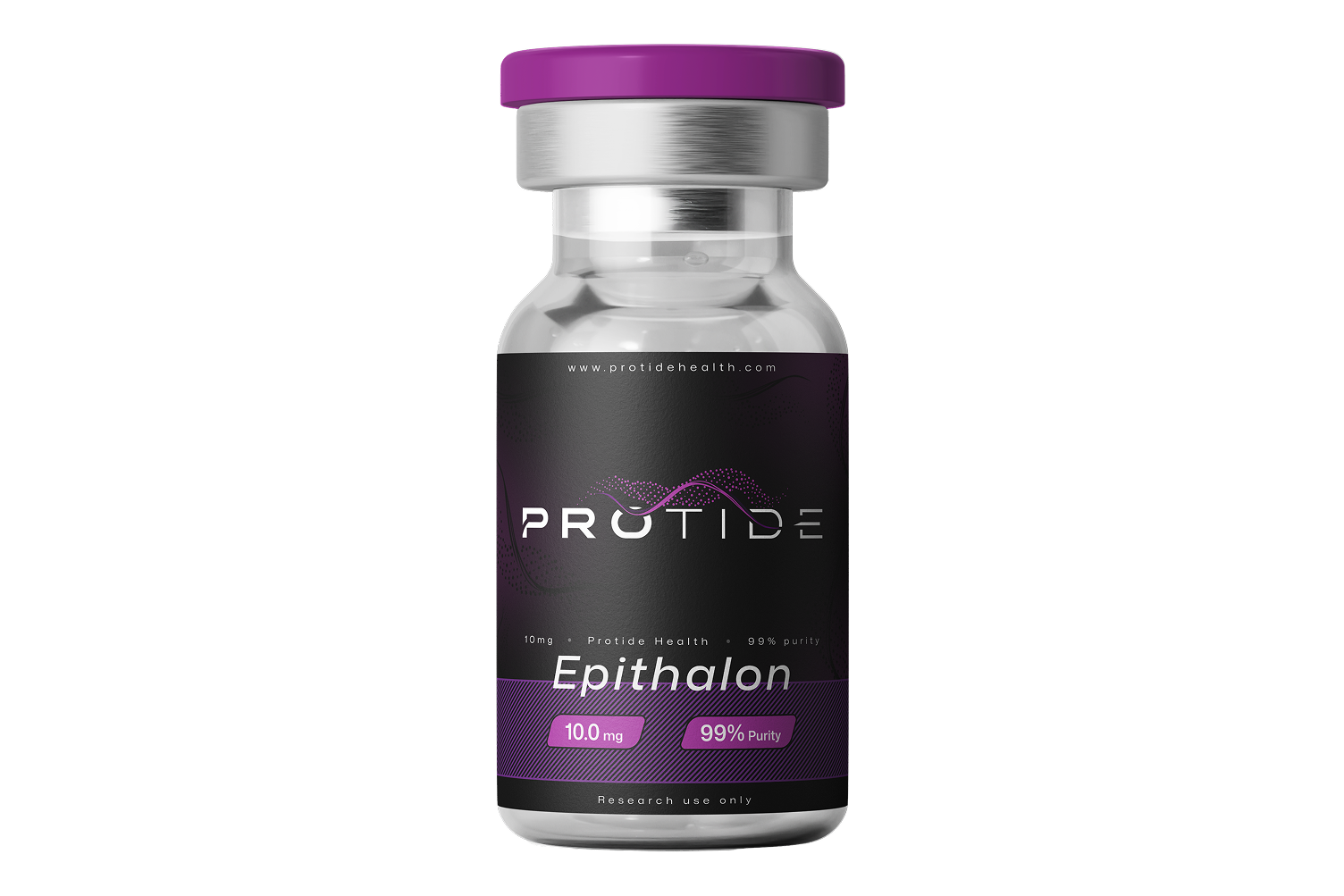
Epithalon peptide 10mg product shot featuring a professionally labeled Protide Health 3mL research vial containing white to off-white lyophilized Ala-Glu-Asp-Gly material, with AEDG tetrapeptide identity, 99% purity, HPLC-MS verification, and laboratory-research-only labeling clearly displayed against a clean scientific background.


Epithalon Peptide 10mg – Protide Health USA
Epithalon Overview & Technical Specifications
Epithalon is a synthetic four-amino-acid peptide with the sequence:
Ala-Glu-Asp-Gly
or:
AEDG
The complete terminal representation is:
H-Ala-Glu-Asp-Gly-OH
Epithalon is also commonly spelled Epitalon or Epithalone in scientific databases and peptide literature.
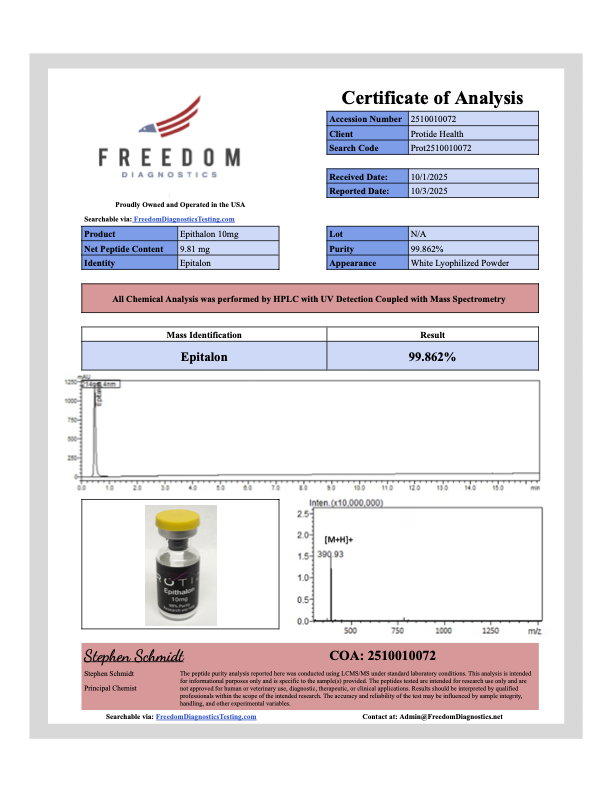
Protide Health supplies Epithalon peptide as 10mg of 99% purity, HPLC-MS verified, third-party tested lyophilized research material in a 3mL vial.
Research involving Epithalon has examined areas including:
- Short-peptide bioregulation
- Telomerase-associated cellular models
- Telomere biology
- Pineal and neuroendocrine signaling
- Melatonin-related research
- Cellular aging models
- Gene-expression pathways
- Oxidative-stress systems
These experimental research areas do not establish human anti-aging or longevity benefits.
Technical Specifications
- Product Name: Epithalon
- Alternative Names: Epitalon, Epithalone, AEDG, Ala-Glu-Asp-Gly
- Quantity: 10mg
- Form: Lyophilized powder
- Vial Size: 3mL
- Purity: 99%
- Testing: HPLC-MS verified; third-party tested
- Peptide Type: Synthetic tetrapeptide
- Peptide Length: 4 amino acids
- Sequence: Ala-Glu-Asp-Gly
- One-Letter Sequence: AEDG
- Terminal Representation: H-Ala-Glu-Asp-Gly-OH
- CAS Number: 307297-39-8
- PubChem CID: 219042
- Molecular Formula: C14H22N4O9
- Molecular Weight: approximately 390.35 g/mol
- Appearance: White to off-white lyophilized powder
- Solubility: Soluble in water and DMSO
- Storage: Store sealed at ≤6°C and protected from heat, light, and moisture
- Research Use: Telomere, telomerase, pineal-signaling, cellular-aging, biochemical, molecular, analytical, and qualified preclinical research only
Researchers can review the supplied Epithalon chemical structure associated with PubChem CID 219042.
Epithalon Identity & Epitalon Terminology
Epithalon and Epitalon are alternative spellings used for the same AEDG tetrapeptide.
PubChem recognizes synonyms including:
- Epitalon
- Epithalon
- Epithalone
- Ala-Glu-Asp-Gly
- AE-0 peptide
The defined molecular structure is:
H-Ala-Glu-Asp-Gly-OH
This identity should be distinguished from Epithalamin.
Epithalon vs Epithalamin
Epithalon and Epithalamin are related historically but are not chemically identical.
Epithalon
A defined synthetic tetrapeptide:
Ala-Glu-Asp-Gly
Epithalamin
A peptide-containing preparation historically derived from bovine pineal tissue.
Modern reviews describe Epitalon as having been synthesized based on peptide research arising from Epithalamin rather than being chemically identical to that extract.
For scientific product labeling, Protide Health should therefore identify this material as Epithalon / Epitalon AEDG, not Epithalamin.
What Is Epithalon?
Epithalon is a short synthetic tetrapeptide investigated primarily within the peptide-bioregulator and aging-research literature.
The sequence consists of:
- Alanine
- Glutamic acid
- Aspartic acid
- Glycine
Published studies have examined Epithalon in:
- Human fibroblast cultures
- Animal aging models
- Pineal and neuroendocrine systems
- Melatonin-related research
- Telomerase models
- Telomere-length experiments
- Cellular oxidative-stress systems
The literature contains intriguing experimental findings, but much of it comes from a relatively concentrated group of researchers and should be interpreted cautiously.
Epithalon Peptide & Telomerase Research
One of the most frequently cited areas of Epithalon peptide research involves telomerase.
A 2004 study involving human fetal fibroblasts reported that Epithalon exposure was associated with:
- Telomerase catalytic-subunit expression
- Telomerase activity
- Telomere elongation
- Additional cellular divisions relative to controls
The study reported approximately 10 additional passages in treated fibroblast cultures compared with untreated aging cells.
This was an in-vitro cellular study.
It does not establish extension of human lifespan or clinical anti-aging effects.
Epithalon & Telomere Research
Telomeres are repetitive nucleotide sequences located at chromosome ends.
They can shorten during repeated cellular division.
Telomerase is an enzyme capable of extending telomeric DNA under specific biological conditions.
Because Epithalon has been investigated in telomerase and telomere models, research may examine:
- Telomerase activity
- Telomere length
- Replicative senescence
- Cell-cycle progression
- Fibroblast aging
- Cellular proliferative limits
These areas should be described as cellular research rather than proof of organism-level rejuvenation.
Epithalon Peptide & Cellular Aging
Short-peptide research has frequently examined cellular aging.
Experimental endpoints may include:
- Cell proliferation
- Replicative lifespan
- Oxidative stress
- Membrane stability
- Gene expression
- Apoptosis
- Senescence-associated pathways
Epithalon has been included in several such studies.
However, cellular lifespan and human lifespan are very different endpoints.
A peptide extending fibroblast divisions in culture does not demonstrate increased human longevity.
Epithalon & Animal Longevity Research
Animal studies have investigated Epithalon in aging and lifespan models.
A study in female Swiss-derived SHR mice examined long-term Epitalon exposure and measured:
- Biomarkers of aging
- Lifespan
- Spontaneous tumor incidence
- Reproductive aging
These studies form part of the historical gerontology literature around Epithalon.
Animal lifespan findings should not be extrapolated directly to human longevity.
Epithalon & Pineal Research
Epithalon emerged from a research tradition focused heavily on pineal gland biology.
The pineal gland plays a central role in:
- Circadian rhythms
- Melatonin production
- Light-dark signaling
- Neuroendocrine coordination
Historical peptide-bioregulator research has investigated whether short pineal-associated peptides influence age-related changes in these systems.
Epithalon has therefore been studied in relation to pineal and neuroendocrine biology.
Epithalon & Melatonin Research
Published reviews have discussed Epithalon in relation to melatonin synthesis and circadian regulation.
A recent review summarized research reporting effects on:
- Melatonin synthesis
- Neuroendocrine signaling
- Gene expression
- Telomerase
- Enzyme activity
- Oxidative-stress pathways
The review also noted that Epitalon’s complete molecular mechanism remains unresolved.
This uncertainty should be preserved when describing the peptide.
Epithalon & Circadian Research
Older peptide-aging literature described experimental changes in circadian melatonin and cortisol rhythms in aged animal models.
Epithalon and related pineal preparations have therefore been studied in:
- Circadian timing
- Hormonal rhythmicity
- Pineal aging
- Neuroendocrine coordination
Such findings remain model dependent.
They do not establish Epithalon as a human sleep or circadian treatment.
Epithalon & Oxidative-Stress Research
Short regulatory peptides, including Epithalon, have been studied in oxidative-stress models.
One in-vitro study reported that several regulatory peptides did not act as direct antioxidants but could influence lipid-peroxidation and membrane-related experimental endpoints.
Interestingly, Epithalon did not reproduce all of the protective effects seen with the other short peptides tested.
This illustrates why Epithalon should not simply be described as an “antioxidant peptide.”
Epithalon Peptide Benefits: Evidence Context
Searches for Epithalon peptide benefits often center on longevity and anti-aging claims.
Published experimental research has investigated:
- Telomerase activity
- Telomere length
- Cellular proliferation
- Pineal biology
- Melatonin pathways
- Circadian regulation
- Animal aging
- Gene expression
These findings do not establish that Protide Health Epithalon:
- Extends human lifespan
- Reverses aging
- Rejuvenates organs
- Prevents age-related disease
- Treats sleep disorders
- Prevents cancer
- Produces proven anti-aging effects
The evidence remains experimental and limited.
Epitalon Dosage Per Day Search Context
The phrase epitalon dosage per day reflects human administration intent.
Protide Health does not provide human dosing instructions.
The 10mg figure on this page describes total research material in the vial.
It is not a recommended daily dose.
No instructions are provided for:
- Human injection
- Daily administration
- Nighttime dosing
- Anti-aging cycles
- Longevity protocols
- Body-weight calculations
- Reconstitution for human use
Historical experimental protocols should not be converted into self-administration guidance.
Epitalon Peptide Dosage Per Day
The search phrase epitalon peptide dosage per day refers to the same human-use intent.
Published animal or historical clinical protocols used specific research materials and controlled settings.
Those conditions may differ in:
- Formulation
- Product identity
- Route
- Purity
- Monitoring
- Experimental purpose
Protide Health therefore provides no human daily dosage recommendation.
Epitalon Peptide Dosing Chart
The phrase epitalon peptide dosing chart commonly refers to a human administration schedule.
Protide Health does not provide:
- Dose-by-day charts
- Injection schedules
- Cycle lengths
- Loading phases
- Maintenance protocols
- Age-based dosing
- Body-weight dosing
For laboratory research, concentration should instead be selected according to validated experimental design.
Epitalon Peptide Protocol Search Context
The phrase epitalon peptide protocol similarly refers to human administration.
A scientifically appropriate research protocol should instead define:
- Model system
- Peptide concentration
- Exposure duration
- Control group
- Replicate number
- Analytical endpoints
- Statistical methodology
The Protide Health product is not accompanied by a human treatment protocol.
Epitalon 50mg Search Context
The keyword epitalon 50mg reflects searches for higher-quantity products.
Protide Health supplies the current Epithalon product as:
10mg
The 10mg specification describes the vial contents.
It does not imply or establish a human dose.
Researchers requiring different quantities should compare product specifications rather than interpreting milligram size as a dosing recommendation.
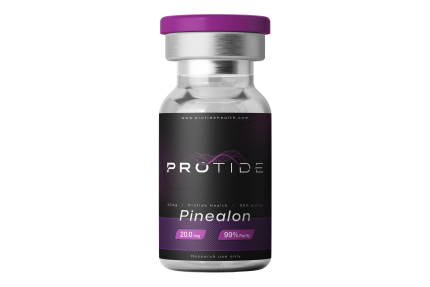
Pinealon vs Epitalon
The search phrase pinealon vs epitalon compares two short peptide bioregulators.
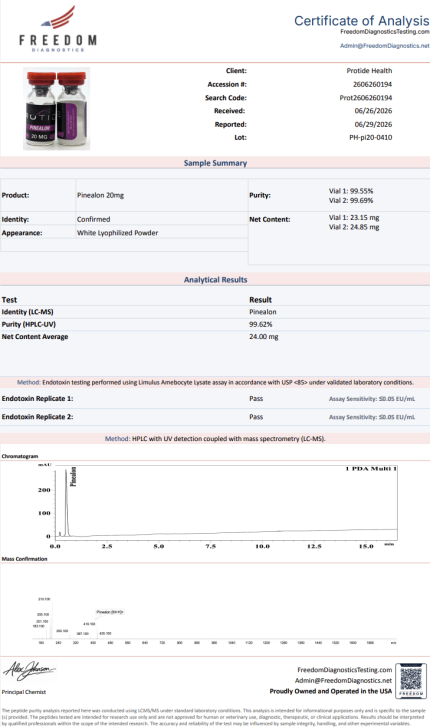
Researchers can review Pinealon 20mg as a distinct tripeptide.
Epithalon / Epitalon
- Sequence: Ala-Glu-Asp-Gly
- Length: 4 amino acids
- Research includes telomerase, pineal, circadian, and cellular-aging models
Pinealon
- Sequence: Glu-Asp-Arg
- Length: 3 amino acids
- Research has included neuronal, hypoxia, and regulatory-peptide models
One study comparing several short regulatory peptides in hypobaric-hypoxia models reported a stronger effect for Pinealon than for Epitalon under those specific experimental conditions.
That result does not establish that one peptide is universally superior to the other.
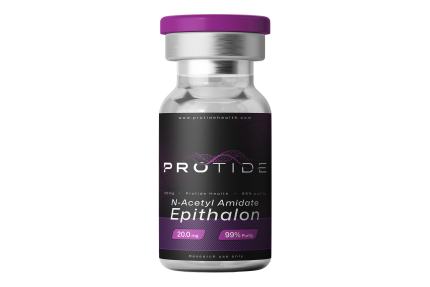
Epithalon vs N-Acetyl Epithalon
Researchers may also distinguish standard Epithalon from N-Acetyl Epithalon.
Standard Epithalon is:
H-Ala-Glu-Asp-Gly-OH
N-acetyl modification changes the N-terminal chemistry.
Modified and unmodified peptides should therefore not automatically be treated as chemically or pharmacokinetically equivalent.
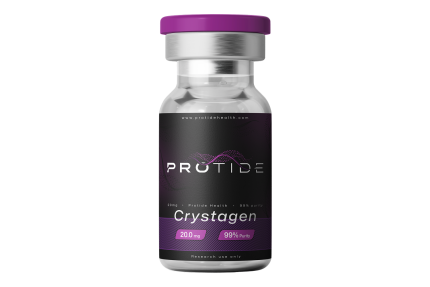
Epithalon vs Crystagen
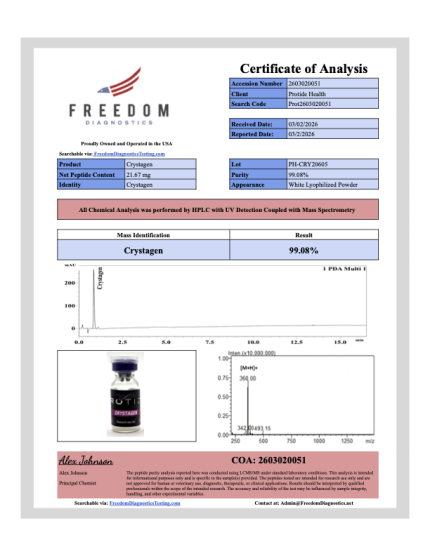
Researchers comparing peptide bioregulators may review Crystagen 20mg.
Epithalon
Ala-Glu-Asp-Gly
Crystagen
Glu-Asp-Pro
Even short sequence differences can alter:
- Molecular weight
- Charge
- Conformation
- Transport
- Biological interactions
Experimental findings from one peptide should not automatically be transferred to the other.
Epithalon & Gene-Expression Research
Short peptide bioregulator studies have proposed effects involving transcription and gene expression.
Research on Epithalon and related peptides has investigated:
- Protein-expression changes
- Transcription-associated pathways
- Cellular differentiation
- Aging-associated gene regulation
However, the exact direct molecular targets remain incompletely characterized.
A recent review specifically noted that despite decades of research, the physicochemical and structural mechanism of Epitalon remains comparatively underdeveloped.
Epithalon Research Applications
Qualified laboratories may investigate Epithalon in research involving:
- Telomerase biology
- Telomere dynamics
- Cellular senescence
- Replicative lifespan
- Pineal signaling
- Melatonin-associated pathways
- Circadian biology
- Gene expression
- Short-peptide bioregulation
- Cellular oxidative-stress models
- Analytical peptide characterization
Appropriate controls and model-specific endpoints should be used.
Related Protide Health Research Products
Researchers comparing modified versions of the AEDG system may review N-Acetyl Epithalon for a chemically distinct N-terminally modified short-peptide research model.
The Pinealon 20mg peptide provides a separate Glu-Asp-Arg tripeptide associated with neuronal and hypoxia research.
Researchers may also examine Crystagen 20mg for a distinct Glu-Asp-Pro bioregulatory tripeptide.
These peptides should not be considered chemically or mechanistically interchangeable with Epithalon peptide.
Research Format & Storage
Protide Health supplies Epithalon peptide as:
- Quantity: 10mg
- Form: Lyophilized powder
- Vial Size: 3mL
- Purity: 99%
- Testing: HPLC-MS verified
- Verification: Third-party tested
- Appearance: White to off-white
- Solubility: Soluble in water and DMSO
Storage specifications:
- Store at ≤6°C
- Keep sealed
- Protect from heat
- Protect from direct light
- Protect from moisture
These specifications describe laboratory storage characteristics only.
Research Limitations
Several limitations should be considered when interpreting Epithalon research:
- Much of the literature comes from a relatively small number of research groups.
- Large modern randomized human trials are limited.
- Telomerase findings are primarily cellular.
- Telomere elongation in fibroblasts does not establish human lifespan extension.
- Animal longevity findings cannot be directly extrapolated to humans.
- Pineal and melatonin findings remain model dependent.
- The molecular mechanism remains incompletely defined.
- Epithalamin and Epithalon are not the same material.
- Pinealon and Epithalon research should not be interchanged.
- The 10mg quantity represents vial contents rather than a human dose.
- Protide Health Epithalon is not an FDA-approved anti-aging, longevity, sleep, or therapeutic product.
For these reasons, Epithalon peptide is supplied strictly for qualified laboratory research.
Literature & Citation Index
Peptide Promotes Overcoming of the Division Limit in Human Somatic Cell
Year: 2004
PMID: 15455129
DOI: 10.1023/B.0000038164.49947.8C
Research Context: Epithalon, human fetal fibroblasts, telomerase activity, telomere elongation, cellular division, and replicative lifespan.
The study reported additional divisions in Epithalon-treated fibroblast cultures, but this was an in-vitro cellular experiment rather than a human longevity trial.
Effect of Epitalon on Biomarkers of Aging, Life Span and Spontaneous Tumor Incidence in Female Swiss-Derived SHR Mice
Year: 2003
PMID: 14501183
DOI: 10.1023/A:1025114230714
Research Context: Epitalon, mouse aging, lifespan, aging biomarkers, reproductive aging, and tumor-incidence models.
Peptides and Ageing
Year: 2002
PMID: 12374906
Research Context: Epitalon, pineal peptide research, circadian melatonin and cortisol, retinal models, gene expression, and experimental gerontology.
Overview of Epitalon — Highly Bioactive Pineal Tetrapeptide With Promising Properties
Year: 2025
PMID: 40141333
Research Context: AEDG identity, pineal peptide history, Epithalamin distinction, melatonin, telomerase, gene expression, neuroendocrine effects, and remaining mechanistic uncertainty.
Researchers can review broader Epithalon, Epitalon, AEDG and short-peptide research indexed by PubMed for additional peer-reviewed literature.
Frequently Asked Questions
What is Epithalon?
Epithalon is a synthetic tetrapeptide composed of Ala-Glu-Asp-Gly, also abbreviated AEDG.
Is Epithalon the same as Epitalon?
Yes. Epithalon and Epitalon are alternate spellings used for the same AEDG tetrapeptide.
Is Epithalon the same as Epithalamin?
No. Epithalamin refers to a pineal peptide preparation/extract, whereas Epithalon is the defined synthetic tetrapeptide Ala-Glu-Asp-Gly.
What is the Epithalon sequence?
The sequence is:
Ala-Glu-Asp-Gly
or:
AEDG
What is the molecular formula?
The molecular formula is:
C14H22N4O9
What is the molecular weight?
The molecular weight is approximately:
390.35 g/mol
What is the CAS number?
The CAS number is:
307297-39-8
What is the PubChem CID?
The PubChem identifier is:
CID 219042
What does Epithalon peptide research investigate?
Research includes telomerase, telomere biology, cellular aging, pineal signaling, melatonin-associated pathways, circadian models, and short-peptide bioregulation.
What is Epitalon dosage per day?
Protide Health does not provide human epitalon dosage per day instructions. The 10mg value describes total vial contents only.
What is Epitalon peptide dosage per day?
No human epitalon peptide dosage per day is provided. Published experimental protocols should not be converted into self-administration guidance.
Is there an Epitalon peptide dosing chart?
No human epitalon peptide dosing chart is provided because this product is supplied strictly for laboratory research.
What is an Epitalon peptide protocol?
Protide Health does not provide a human epitalon peptide protocol. Laboratory protocols should define model-specific concentrations, controls, and endpoints.
What is the difference between Pinealon vs Epitalon?
Pinealon vs Epitalon compares two distinct short peptides. Pinealon is Glu-Asp-Arg, while Epitalon is Ala-Glu-Asp-Gly. Their research literature and molecular structures differ.
Does Protide Health sell Epitalon 50mg?
This product specification is for 10mg Epithalon. The 10mg figure represents vial contents, not a human dose.
Does Epithalon extend lifespan?
Animal and cellular studies have investigated lifespan- and aging-related endpoints, but there is no established evidence that Protide Health Epithalon extends human lifespan.
What purity does Protide Health specify?
Protide Health specifies 99% purity, HPLC-MS verification, and third-party testing.
Is Epithalon intended for human use?
No. It is supplied exclusively for telomerase, telomere, pineal-signaling, cellular-aging, biochemical, molecular, analytical, in-vitro, and qualified preclinical research.
Laboratory Terms & Compliance
Laboratory Research Use Only
This Epithalon peptide product is supplied exclusively for laboratory research, telomere and telomerase studies, cellular-aging investigation, pineal and circadian research, analytical testing, biochemical experimentation, molecular studies, in-vitro investigation, and qualified preclinical experimentation.
It is not intended for human or veterinary consumption, anti-aging therapy, longevity treatment, sleep treatment, medical use, injection, diagnostic use, therapeutic use, or clinical administration.
No human dosage, daily protocol, injection schedule, anti-aging cycle, longevity protocol, Epitalon peptide dosing chart, body-weight calculation, treatment cycle, or human-use preparation guidance is provided.
The purchaser is responsible for appropriate laboratory handling, storage, and use under applicable institutional, federal, state, and local requirements.
For research use only.


MAECENAS IACULIS
Vestibulum curae torquent diam diam commodo parturient penatibus nunc dui adipiscing convallis bulum parturient suspendisse parturient a.Parturient in parturient scelerisque nibh lectus quam a natoque adipiscing a vestibulum hendrerit et pharetra fames nunc natoque dui.
ADIPISCING CONVALLIS BULUM
- Vestibulum penatibus nunc dui adipiscing convallis bulum parturient suspendisse.
- Abitur parturient praesent lectus quam a natoque adipiscing a vestibulum hendre.
- Diam parturient dictumst parturient scelerisque nibh lectus.
Scelerisque adipiscing bibendum sem vestibulum et in a a a purus lectus faucibus lobortis tincidunt purus lectus nisl class eros.Condimentum a et ullamcorper dictumst mus et tristique elementum nam inceptos hac parturient scelerisque vestibulum amet elit ut volutpat.
Related products
Reviews
There are no reviews yet.