
Tesamorelin Peptide
Price range: $85.00 through $155.00
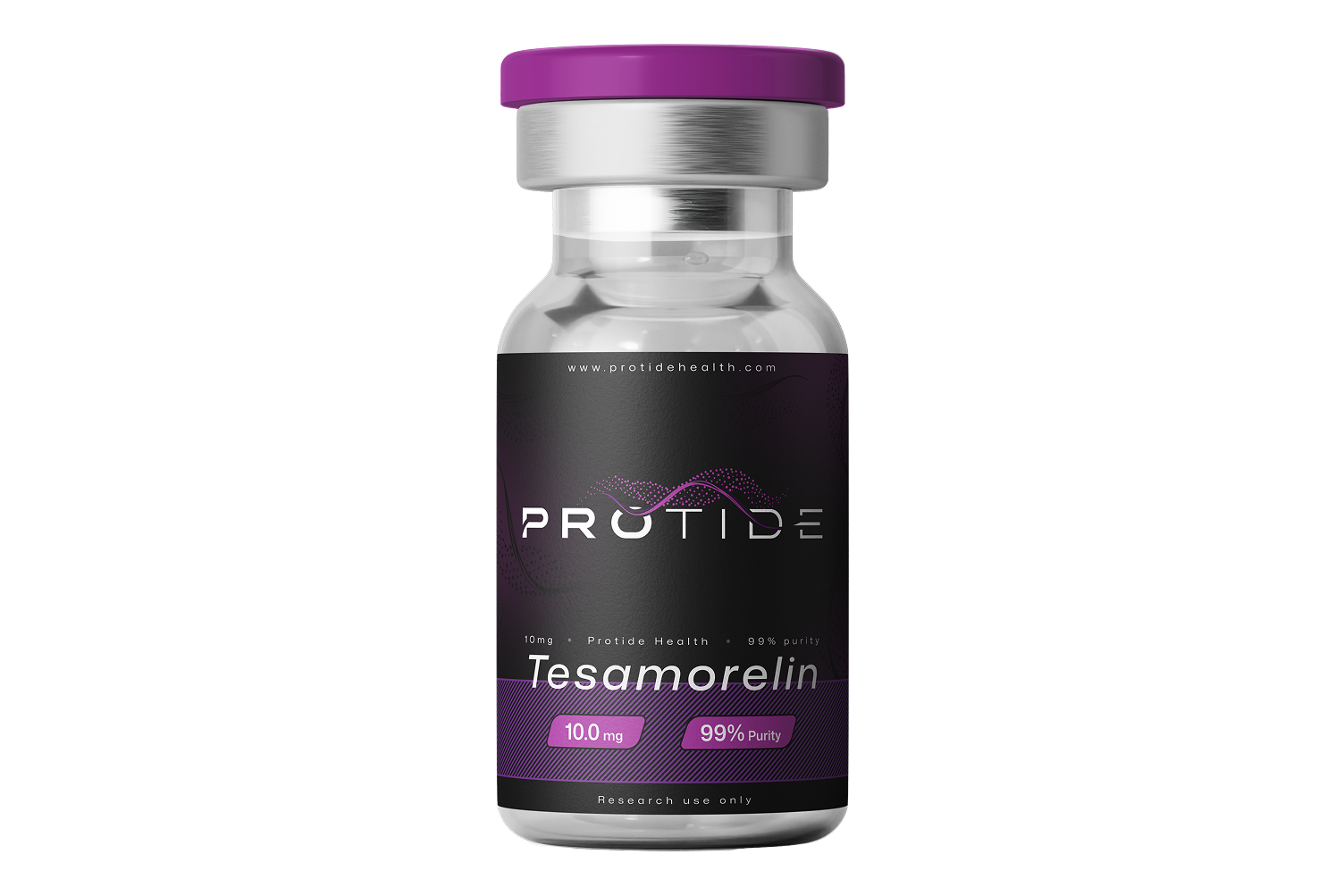
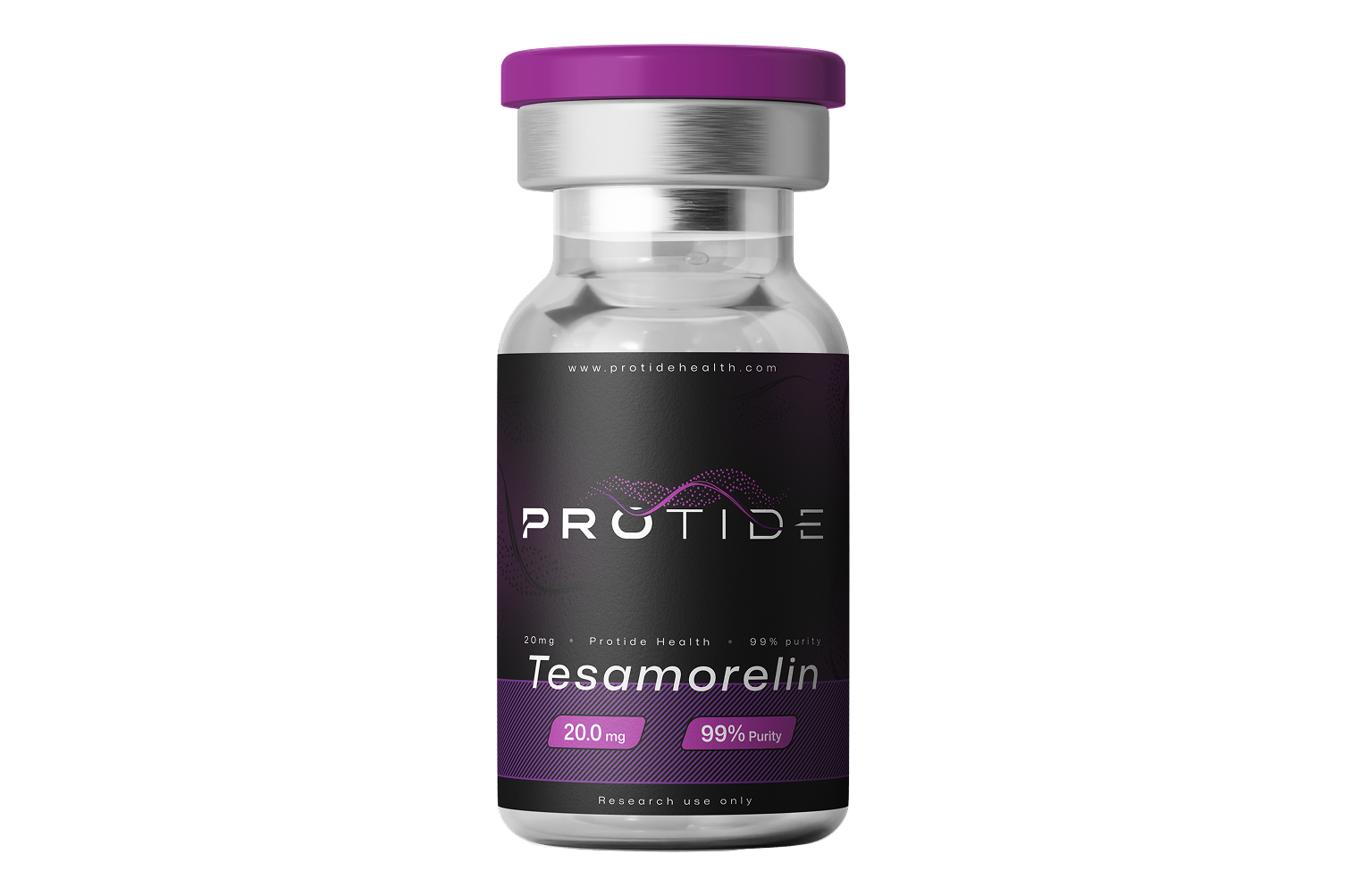
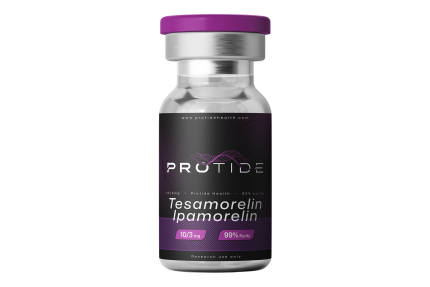
Tesamorelin peptide product shot featuring a professionally labeled Protide Health 3mL research vial containing white to off-white lyophilized powder, with available 10mg and 20mg strengths clearly displayed against a clean laboratory-style background with research-use-only labeling.


Tesamorelin Peptide 10mg & 20mg – Protide Health USA
Tesamorelin Peptide Overview & Technical Specifications
Tesamorelin peptide is a synthetic analogue of human growth hormone-releasing hormone containing 44 amino-acid residues and an N-terminal trans-3-hexenoyl modification.
The sequence is:
(trans-3-hexenoic acid)-YADAIFTNSYRKVLGQLSARKLLQDIMSRQQGESNQERGARARL-NH₂
The supplied Tesamorelin PubChem chemical record identifies the free peptide as PubChem CID 16137828, CAS 218949-48-5, molecular formula C221H366N72O67S, and molecular weight approximately 5136 g/mol.
Protide Health supplies tesamorelin peptide in 10mg and 20mg sizes as 99% purity lyophilized material for controlled biochemical, receptor-binding, endocrine-signaling, cellular, and qualified preclinical research.
Technical Specifications
- Product Name: Tesamorelin
- Synonym / Development Name: TH9507
- Available Sizes: 10mg and 20mg
- Form: Lyophilized powder
- Vial Size: 3mL
- Purity: 99%
- Testing: HPLC-MS verified; third-party tested
- Peptide Length: 44 amino acids
- Classification: Synthetic GHRH analogue
- CAS Number: 218949-48-5
- PubChem CID: 16137828
- Molecular Formula: C221H366N72O67S
- Molecular Weight: Approximately 5135.9 g/mol
- Appearance: White to off-white lyophilized powder
- Solubility: Soluble in water
- Storage: Store sealed at ≤6°C and protected from heat, light, and moisture
- Research Use: Laboratory analysis, receptor research, biochemical investigation, and qualified preclinical experimentation
Tesamorelin Peptide Mechanism of Action & Research Context
The primary tesamorelin peptide mechanism involves agonism of the growth hormone-releasing hormone receptor (GHRH-R).
GHRH-R is a class B G protein-coupled receptor strongly associated with pituitary somatotroph cells. Receptor activation is linked primarily to Gs-protein signaling, stimulation of adenylate cyclase, increased intracellular cyclic AMP, protein kinase A activity, and downstream endocrine signaling.
In research involving pharmaceutical tesamorelin preparations, GHRH-receptor activation has also been associated with increased pulsatile growth-hormone signaling and changes in circulating IGF-I.
Researchers can examine broader tesamorelin research indexed by PubMed for published work involving GHRH signaling, endocrine pathways, adipose-tissue models, clinical pharmacology, and peptide structure.
Preclinical and Experimental Research Applications
GHRH Receptor Signaling Research
A central area of tesamorelin peptide research involves the GHRH receptor.
Experimental investigations of this pathway commonly evaluate:
- GHRH-R activation
- Gs-protein signaling
- Adenylate cyclase activity
- Intracellular cAMP
- Pituitary somatotroph responses
- GH-associated signaling
- IGF-I-associated downstream pathways
These endpoints provide mechanistic information about endocrine signaling without establishing therapeutic activity for this Protide Health research material.
Pituitary Somatotroph Research
GHRH signaling plays an important role in pituitary somatotroph biology.
Laboratory research has examined receptor activation, intracellular second-messenger signaling, regulated GH secretion, receptor desensitization, and downstream transcriptional pathways.
The structural relationship between tesamorelin and endogenous GHRH makes it relevant for experiments examining modified GHRH analogues and receptor-dependent responses.
Adipose-Tissue and Metabolic Research
Pharmaceutical tesamorelin has been extensively studied in controlled trials involving specific patient populations with HIV-associated abdominal adiposity.
Those studies investigated endpoints such as:
- Visceral adipose tissue
- Body composition
- IGF-I
- Lipid measurements
- Glucose-related variables
- Liver fat
- Anthropometric measurements
These clinical findings apply to specific FDA-regulated pharmaceutical preparations and defined populations rather than to the Protide Health laboratory product.
Peptide Structure and Stability Research
Tesamorelin differs structurally from endogenous GHRH through an N-terminal modification involving trans-3-hexenoic acid.
Such modification is relevant to research examining peptide stability, susceptibility to enzymatic degradation, receptor activity, and structure–activity relationships.
The tesamorelin peptide can therefore serve as a model for studying how chemical modification affects GHRH-related peptide pharmacology.
What Is Tesamorelin?
Researchers searching what is tesamorelin are referring to a synthetic 44-amino-acid analogue of growth hormone-releasing hormone.
The peptide retains GHRH-receptor agonist activity while incorporating an N-terminal structural modification.
It should be distinguished from other GHRH-related peptides such as Sermorelin, CJC-1295 No DAC, and longer-acting modified analogues, because differences in sequence and chemical modification can produce different experimental pharmacology.
Tesamorelin Benefits: What Published Research Actually Shows
Searches for tesamorelin benefits commonly refer to clinical results obtained with prescription pharmaceutical tesamorelin.
Randomized controlled studies in people with HIV-associated abdominal fat accumulation reported reductions in visceral adipose tissue and changes in several metabolic and body-composition endpoints during treatment with pharmaceutical preparations.
For example, one randomized trial reported an approximately 15% reduction in visceral adipose tissue over 26 weeks compared with an increase in the placebo group. Other controlled work has investigated liver fat and related metabolic measurements.
These findings are important clinical evidence for regulated pharmaceutical tesamorelin, but they should not be presented as benefits of the Protide Health research vial.
The tesamorelin peptide sold here is supplied exclusively as laboratory research material.
Tesamorelin Side Effects and Research Interpretation
The phrase tesamorelin side effects relates primarily to safety information for approved or investigational pharmaceutical use in humans.
That information should not be used to imply that a laboratory research vial has an established human safety profile.
Clinical studies of pharmaceutical tesamorelin have monitored variables including:
- Glucose metabolism
- IGF-I concentrations
- Injection-site reactions
- Hypersensitivity
- Musculoskeletal symptoms
- General adverse-event reporting
Such observations relate to specific clinical products, doses, populations, and protocols.
Protide Health does not make human safety or tolerability claims for this research material.
Understanding Tesamorelin Before and After Searches
The phrase tesamorelin before and after often refers to human body-composition or appearance outcomes.
Clinical trials of prescription tesamorelin have measured changes in visceral adipose tissue, waist-related measurements, body image, and other endpoints in defined patient populations.
Those studies should not be transformed into before-and-after marketing claims for a research-use-only product.
For laboratory purposes, scientifically appropriate endpoints include receptor activity, cAMP signaling, GH/IGF-associated pathways, adipocyte biology, molecular responses, and other controlled measurements.
Tesamorelin Dosage Searches and Laboratory Research
Searches for tesamorelin dosage, tesamorelin dosage per day, or tesamorelin dosage for bodybuilding involve human-use administration questions.
Protide Health does not provide human dosing, daily dosing schedules, bodybuilding protocols, injection instructions, titration schedules, cycles, or treatment recommendations.
The stated 10mg and 20mg amounts identify the quantity of research material contained in the vial and are not recommended doses.
Research Limitations
Research surrounding tesamorelin peptide includes receptor assays, endocrine research, animal studies, and controlled clinical trials involving regulated pharmaceutical preparations.
Important limitations include:
- GHRH-receptor activity does not establish broader therapeutic efficacy.
- Cell-based findings cannot automatically be extrapolated to intact organisms.
- Animal findings cannot establish equivalent human outcomes.
- Clinical findings apply to defined pharmaceutical preparations and patient populations.
- Results involving prescription tesamorelin do not establish safety or efficacy for independently supplied laboratory material.
- Changes in visceral adipose tissue or other clinical endpoints should not be generalized to bodybuilding or general weight-management contexts.
- Findings from one GHRH analogue should not automatically be applied to another.
These distinctions are essential when interpreting research involving tesamorelin peptide.
Literature & Citation Index
Metabolic Effects of a Growth Hormone-Releasing Factor in Patients With HIV
Journal: New England Journal of Medicine
Year: 2007
PMID: 18057338
Research Context: Randomized controlled investigation of visceral adipose tissue, triglycerides, IGF-I, glucose-related measurements, and body composition in people with HIV-associated abdominal fat accumulation.
Effects of Tesamorelin, a Growth Hormone-Releasing Factor, in HIV-Infected Patients With Abdominal Fat Accumulation
Year: 2010
PMID: 20101189
Research Context: Randomized placebo-controlled research examining visceral adipose tissue and related metabolic endpoints, including a longer-term extension phase.
Reduction in Visceral Adiposity Is Associated With an Improved Metabolic Profile in HIV-Infected Patients Receiving Tesamorelin
Year: 2012
PMID: 22495074
DOI: 10.1093/cid/cis251
Research Context: Pooled phase III analyses examining associations between changes in visceral adipose tissue and metabolic measurements.
Effect of Tesamorelin on Visceral Fat and Liver Fat in HIV-Infected Patients With Abdominal Fat Accumulation
Journal: JAMA
Year: 2014
PMID: 25038357
Research Context: Randomized trial examining visceral adipose tissue, liver fat, glucose measurements, and related metabolic endpoints.
Related Protide Health Research Products
Researchers examining other peptide formulations may review the Illumineuro Einstein Peptide Blend for a distinct multi-peptide research system.
The Klow GHK-Cu, KPV, BPC-157 & TB-500 Blend provides a separate multi-component formulation associated with different molecular pathways.
Researchers can also examine the NAD+, MOTS-c & 5-Amino-1MQ Mitoprime Blend for a chemically and mechanistically different metabolic-research formulation.
These compounds and blends have different structures, molecular targets, and experimental applications and should not be considered interchangeable with tesamorelin.
Frequently Asked Questions
What is a Tesamorelin peptide?
A tesamorelin peptide is a synthetic 44-amino-acid GHRH analogue containing an N-terminal trans-3-hexenoyl modification. It is studied primarily through growth hormone-releasing hormone receptor signaling.
What is the Tesamorelin sequence?
The sequence is:
(trans-3-hexenoic acid)-YADAIFTNSYRKVLGQLSARKLLQDIMSRQQGESNQERGARARL-NH₂
What receptor does Tesamorelin target?
Tesamorelin is a GHRH receptor agonist. Research on GHRH-R commonly examines Gs-protein activation, adenylate cyclase, cAMP signaling, pituitary somatotroph biology, and related endocrine pathways.
What sizes does Protide Health supply?
The product is available in 10mg and 20mg sizes as lyophilized material in a 3mL vial.
What does research say about Tesamorelin benefits?
Controlled clinical research with regulated pharmaceutical tesamorelin has demonstrated effects on visceral adipose tissue and other endpoints in specific HIV-associated lipodystrophy populations. Those findings should not be interpreted as benefits of this laboratory research product.
Is Tesamorelin FDA approved?
Tesamorelin is an active ingredient used in FDA-approved prescription pharmaceutical products for a specific medical indication. However, the Protide Health tesamorelin research product is not an FDA-approved drug product and is not supplied for human treatment or administration.
What purity does Protide Health specify?
The supplied specification states 99% purity, with HPLC-MS verification and third-party testing.
Is this product intended for human use?
No. It is supplied exclusively for biochemical analysis, receptor research, molecular investigation, analytical testing, in-vitro studies, and qualified preclinical experimentation.
Laboratory Terms & Compliance
Laboratory Research Use Only
This product is supplied exclusively for laboratory research, analytical testing, in-vitro studies, preclinical research, and qualified scientific experimentation.
It is not intended for human or veterinary consumption, medical use, diagnostic use, therapeutic use, bodybuilding, athletic-performance enhancement, general weight-loss use, or clinical administration.
No human dosage, daily dosing, injection, titration, bodybuilding protocol, treatment schedule, or preparation instructions are provided.
The purchaser is responsible for appropriate laboratory handling, storage, and use in accordance with applicable institutional, federal, state, and local requirements.
For research use only.
| Select vial strength |
10mg ,20mg |
|---|


MAECENAS IACULIS
Vestibulum curae torquent diam diam commodo parturient penatibus nunc dui adipiscing convallis bulum parturient suspendisse parturient a.Parturient in parturient scelerisque nibh lectus quam a natoque adipiscing a vestibulum hendrerit et pharetra fames nunc natoque dui.
ADIPISCING CONVALLIS BULUM
- Vestibulum penatibus nunc dui adipiscing convallis bulum parturient suspendisse.
- Abitur parturient praesent lectus quam a natoque adipiscing a vestibulum hendre.
- Diam parturient dictumst parturient scelerisque nibh lectus.
Scelerisque adipiscing bibendum sem vestibulum et in a a a purus lectus faucibus lobortis tincidunt purus lectus nisl class eros.Condimentum a et ullamcorper dictumst mus et tristique elementum nam inceptos hac parturient scelerisque vestibulum amet elit ut volutpat.
Related products
Cagrilintide
Price range: $95.00 through $155.00
GLP-3
Price range: $145.00 through $550.00
Research Bundle (Tesamorelin, Ipamorelin, BPC-157, TB-500)
Original price was: $285.00.$275.00Current price is: $275.00.
Reviews
There are no reviews yet.