
Semax (N-Acetyl Amidate) 10mg
$75.00
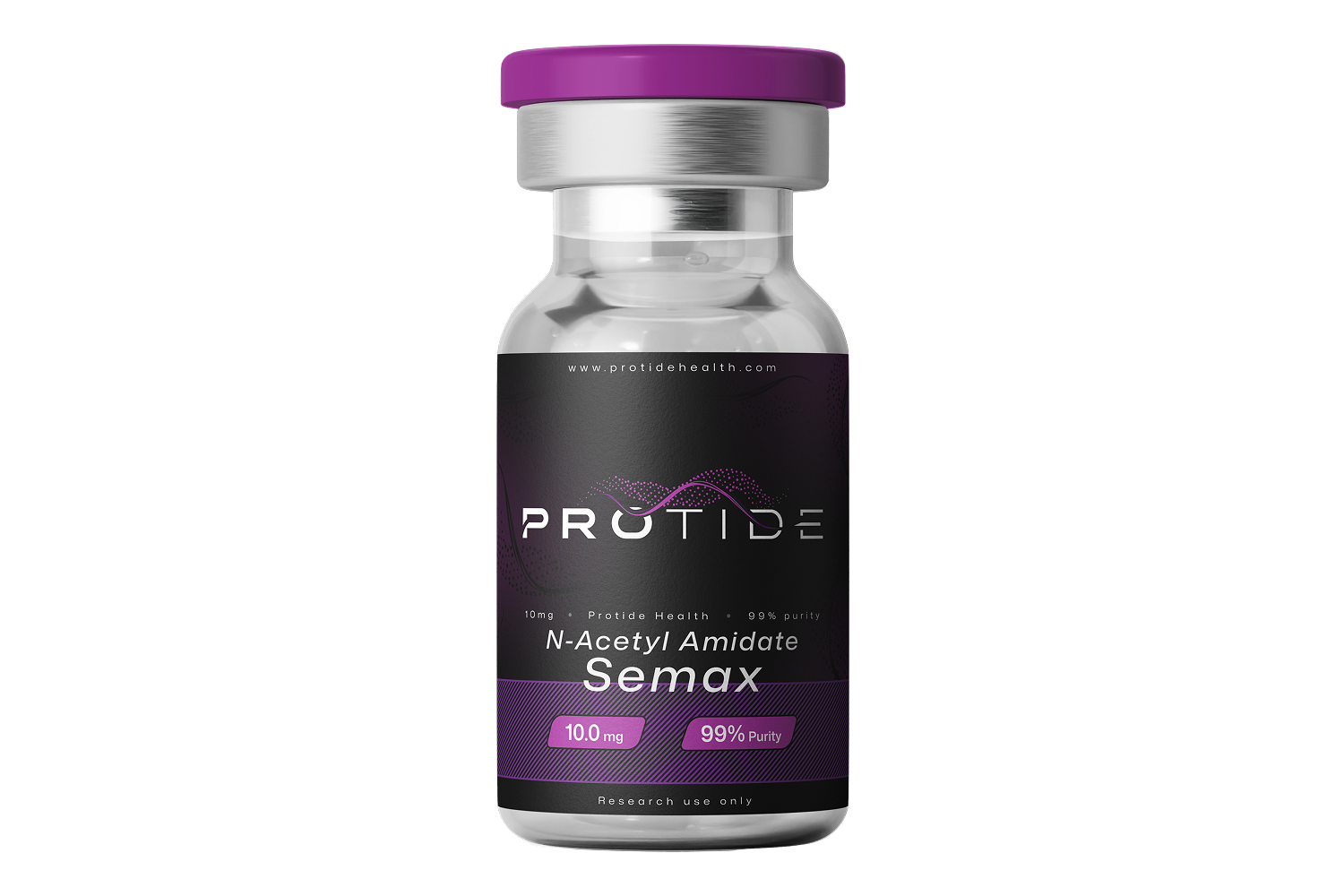
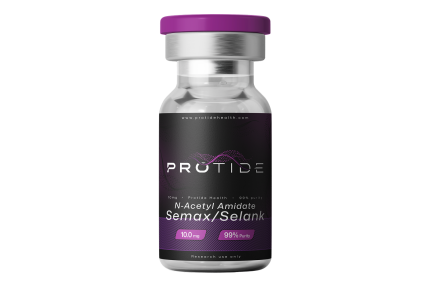
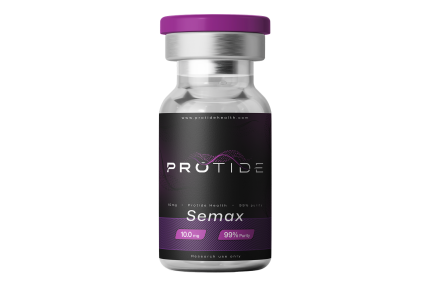
Semax 10mg N-Acetyl Amidate product shot featuring a professionally labeled Protide Health 3mL research vial containing white to off-white lyophilized powder, with 10mg strength and N-Acetyl Semax Amidate identification clearly displayed against a clean laboratory-style background with research-use-only labeling.


10mg N-Acetyl Amidate – Protide Health USA
Semax Peptide Overview & Technical Specifications
Semax is a synthetic heptapeptide derived from the ACTH(4-10) sequence framework and built around the amino-acid sequence Met-Glu-His-Phe-Pro-Gly-Pro, abbreviated MEHFPGP.
The Protide Health product is specifically N-Acetyl Semax Amidate, not the unmodified parent peptide. Its structure contains two terminal modifications:
- N-terminal acetylation: Ac-
- C-terminal amidation: -NH₂
The resulting verified sequence is:
Ac-Met-Glu-His-Phe-Pro-Gly-Pro-NH₂
The supplied N-Acetyl Semax Amidate PubChem record catalogs this exact modified peptide as PubChem CID 172638603, CAS 2920938-90-3, molecular formula C39H54N10O10S, and molecular weight approximately 855.0 g/mol.
Protide Health supplies the peptide as a 10mg lyophilized laboratory material intended exclusively for controlled biochemical, analytical, molecular, cellular, and preclinical research.
Technical Specifications
- Product Name: N-Acetyl Semax Amidate
- Quantity: 10mg
- Vial Size: 3mL
- Form: Lyophilized powder
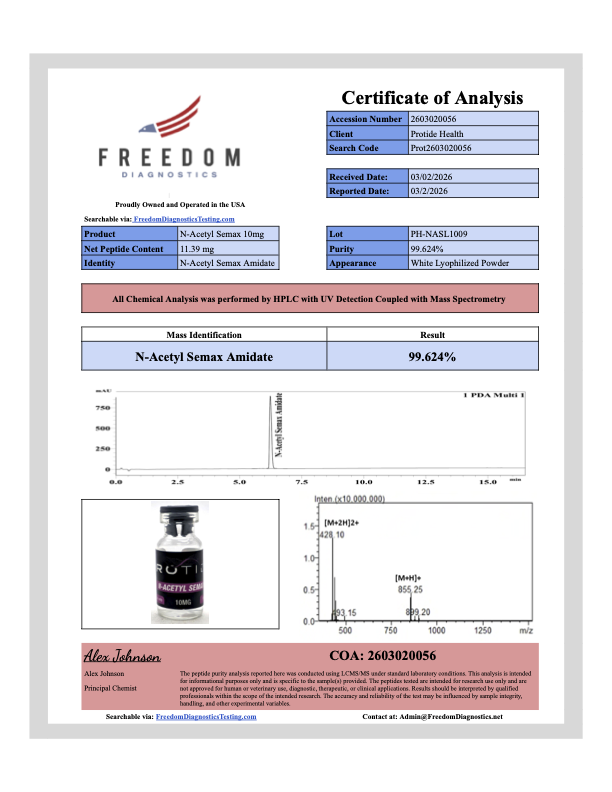
- Purity: 99%
- Testing: HPLC-MS verified; third-party tested
- Peptide Length: 7 amino acids
- Sequence: Ac-Met-Glu-His-Phe-Pro-Gly-Pro-NH₂
- One-Letter Parent Sequence: MEHFPGP
- CAS Number: 2920938-90-3
- PubChem CID: 172638603
- Molecular Formula: C39H54N10O10S
- Molecular Weight: Approximately 855.0 g/mol
- Appearance: White to off-white lyophilized powder
- Solubility: Soluble in DMSO; limited solubility in water
- Storage: Store sealed at ≤6°C and protected from heat, light, and moisture
- Research Use: Laboratory, biochemical, molecular, cellular, and preclinical investigation only
Semax Mechanism & Research Context
Published Semax research has examined several molecular systems, particularly neurotrophin-associated pathways and changes in gene expression.
Parent-peptide experiments in rat hippocampal tissue have reported alterations in brain-derived neurotrophic factor (BDNF) and its receptor TrkB following experimental exposure. Additional studies have examined transcription of BDNF, NGF, TrkA, TrkB, and other neurotrophin-related genes under controlled animal-model conditions.
These studies provide an important mechanistic research background, but they predominantly involve standard parent peptide rather than the exact N-acetylated and C-amidated molecule sold by Protide Health.
Researchers can explore the broader body of Semax scientific literature indexed by PubMed when evaluating parent-peptide neurobiology, gene-expression research, peptide modification, and related preclinical investigations.
Preclinical Research Applications
Neurotrophin Signaling Research
One of the better-characterized experimental areas involves BDNF and TrkB signaling.
Research using rat hippocampal models reported changes in BDNF protein, BDNF gene expression, TrkB expression, and TrkB phosphorylation following exposure to the parent peptide.
Additional animal experiments examined BDNF and nerve growth factor transcription in the hippocampus, frontal cortex, and other brain regions.
These findings have made neurotrophin-associated pathways an important area of Semax laboratory research.
However, these observations should not automatically be attributed quantitatively to N-Acetyl Semax Amidate because terminal chemical modification can alter molecular interactions.
Gene-Expression Research
Experimental studies have also investigated short-term transcriptional responses following parent-peptide exposure.
Researchers have measured changes involving neurotrophins, neurotrophin receptors, immune-related genes, vascular-associated genes, and other transcriptional targets in animal models.
Transcriptomic studies provide a useful framework for examining how regulatory peptides may influence complex cellular response networks rather than acting through a single established receptor.
N-Acetyl Semax Amidate can therefore be investigated as a chemically distinct research analogue within controlled molecular and gene-expression experiments.
Peptide–Metal Interaction Research
A particularly relevant area for N-acetylated material is metal-ion coordination.
Published biochemical research compared parent peptide with N-acetyl Semax and found that blocking the N-terminal amino group altered copper(II) coordination chemistry and associated redox characteristics.
The experiments also investigated zinc interactions and neuroblastoma cell systems.
This research demonstrates that N-terminal acetylation is not merely a naming difference; it can measurably alter peptide chemistry.
The product described here includes an additional C-terminal amidation, meaning it should be treated as a distinct molecular research material.
Peptide Modification Research
N-terminal acetylation and C-terminal amidation are chemically meaningful modifications.
N-terminal acetylation blocks the free amino group at the beginning of the peptide, while amidation replaces the terminal carboxyl functionality with an amide.
These structural changes can affect properties such as:
- Net charge
- Enzymatic susceptibility
- Metal coordination
- Molecular interactions
- Stability under specific experimental conditions
Accordingly, research involving standard peptide should not automatically be assumed to describe N-Acetyl Semax Amidate.
What Research on Semax Peptide Benefits Actually Shows
Searches for semax peptide benefits can produce broad claims that go beyond what controlled experimental evidence establishes.
The research literature more appropriately supports discussion of measurable experimental endpoints, including:
- BDNF-associated signaling
- TrkB-associated signaling
- Neurotrophin gene transcription
- Peptide–metal coordination
- Gene-expression changes
- Neurochemical signaling
- Molecular responses in cultured cells
- Preclinical neuronal research
Some parent-peptide studies have also investigated cognition, ischemic models, neuroprotection, and other biological outcomes.
Those findings originate from specific animal, cellular, or clinical-research contexts and should not be interpreted as demonstrating that this Protide Health laboratory product provides cognitive, neurological, therapeutic, or medical benefits.
N-Acetyl Semax Amidate vs Standard Semax
The parent peptide sequence is:
Met-Glu-His-Phe-Pro-Gly-Pro
The Protide Health research material is:
Ac-Met-Glu-His-Phe-Pro-Gly-Pro-NH₂
The additional acetyl and amide groups make these chemically distinct molecules.
This distinction matters because published research has already demonstrated that N-terminal acetylation can alter coordination chemistry compared with unmodified Semax.
Researchers should therefore match experimental literature carefully to the molecular form being studied rather than treating all Semax-related compounds as interchangeable.
Lyophilized Research Format
N-Acetyl Semax Amidate is supplied as a white to off-white lyophilized powder.
Lyophilization removes water from frozen material under reduced pressure, creating dry material commonly used in controlled peptide-research workflows.
According to the supplied product specification, the vial should remain sealed at ≤6°C and protected from heat, light, and moisture.
The supplied specification describes solubility in DMSO with limited solubility in water.
No nasal-spray, dosing, administration, injection, or other human-use instructions are provided.
Research Limitations
The scientific literature surrounding Semax is significantly broader than the literature specifically characterizing N-Acetyl Semax Amidate.
Important limitations include:
- Much of the mechanistic literature uses standard parent peptide.
- N-terminal acetylation changes molecular chemistry.
- C-terminal amidation creates an additional structural modification.
- Parent-peptide findings should not automatically be assigned to the amidated N-acetyl analogue.
- Animal experiments cannot establish equivalent human outcomes.
- Cell-culture studies do not demonstrate effects in intact humans.
- Changes in BDNF, TrkB, NGF, or other markers are experimental observations rather than evidence of therapeutic benefit.
- More direct research is needed to characterize this exact modified peptide independently.
Protide Health therefore supplies this material exclusively for controlled laboratory investigation.
Literature & Citation Index
Semax, an Analog of ACTH(4-10), Regulates BDNF and TrkB Expression in the Rat Hippocampus
Authors: Oleg V. Dolotov et al.
Journal: Brain Research
Year: 2006
PMID: 16996037
DOI: 10.1016/j.brainres.2006.07.108
Research Context: BDNF, TrkB, and rat hippocampal signaling following parent-peptide exposure.
Influence of the N-Terminus Acetylation of Semax on Copper(II) and Zinc(II) Coordination and Biological Properties
Authors: Antonio Magrì et al.
Journal: Journal of Inorganic Biochemistry
Year: 2016
PMID: 27586814
DOI: 10.1016/j.jinorgbio.2016.08.013
Research Context: Effects of N-terminal acetylation on copper and zinc coordination, redox chemistry, and neuroblastoma-cell experiments.
Semax and Pro-Gly-Pro Activate the Transcription of Neurotrophins and Their Receptor Genes After Cerebral Ischemia
Year: 2009
PMID: 19633950
DOI: 10.1007/s10571-009-9432-0
Research Context: Neurotrophin and neurotrophin-receptor transcription in a rat experimental model.
Semax, an Analogue of ACTH(4-10), Binds Specifically and Increases BDNF Protein in Rat Basal Forebrain
Year: 2006
PMID: 16635254
DOI: 10.1111/j.1471-4159.2006.03658.x
Research Context: Specific peptide binding and BDNF-associated measurements in rat basal forebrain.
Related Protide Health Research Products
Researchers evaluating additional peptide systems may review the VIP 10mg research peptide for a separate neuropeptide and receptor-signaling research model.
The Vesugen 20mg research peptide provides a structurally distinct short-peptide system for molecular and cellular research.
Researchers may also examine Thymosin Alpha-1 10mg for a separate peptide associated with immunological and molecular-signaling research.
These compounds have different amino-acid sequences, structures, and experimental research contexts and should not be considered interchangeable.
Frequently Asked Questions
What is Semax?
Semax is a synthetic heptapeptide based on the ACTH(4-10)-related sequence Met-Glu-His-Phe-Pro-Gly-Pro. This Protide Health product is a modified form containing N-terminal acetylation and C-terminal amidation.
What is N-Acetyl Semax Amidate?
N-Acetyl Semax Amidate is the modified peptide Ac-Met-Glu-His-Phe-Pro-Gly-Pro-NH₂. Its terminal modifications distinguish it chemically from standard Semax.
What is a Semax peptide?
The term semax peptide generally refers to the ACTH(4-10)-related synthetic heptapeptide family based on MEHFPGP. Different terminal modifications can produce chemically distinct analogues and should be identified precisely in laboratory research.
What does research say about Semax peptide benefits?
Published experiments have investigated BDNF, TrkB, neurotrophin transcription, peptide–metal interactions, neurochemical signaling, and other biological endpoints. These findings should be described as laboratory or preclinical observations rather than established benefits of this research product.
Is this Semax nasal spray?
No. This product is supplied as a 10mg lyophilized laboratory research material in a 3mL vial. It is not presented as a nasal spray, pharmaceutical preparation, or human-use formulation.
What is the molecular weight?
The verified molecular weight for N-Acetyl Semax Amidate with molecular formula C39H54N10O10S is approximately 855.0 g/mol.
What purity does Protide Health specify?
The supplied specification states 99% purity, with HPLC-MS verification and third-party testing.
Is Semax and Selank the same compound?
No. Semax and Selank are structurally different peptide families. Semax is based on the MEHFPGP sequence, while Selank is derived from a tuftsin-related sequence.
Is this product intended for human use?
No. It is supplied strictly for biochemical analysis, molecular research, analytical testing, cell-based investigation, and qualified preclinical experimentation.
Laboratory Terms & Compliance
Laboratory Research Use Only
This product is supplied exclusively for laboratory research, analytical testing, in-vitro studies, preclinical research, and qualified scientific experimentation.
It is not intended for human or veterinary consumption, medical use, diagnostic use, therapeutic use, cognitive enhancement, psychiatric use, or clinical administration.
No dosage, nasal administration, injection, or other human-use instructions are provided.
The purchaser is responsible for appropriate laboratory handling, storage, and use in accordance with applicable institutional, federal, state, and local requirements.
For research use only.


MAECENAS IACULIS
Vestibulum curae torquent diam diam commodo parturient penatibus nunc dui adipiscing convallis bulum parturient suspendisse parturient a.Parturient in parturient scelerisque nibh lectus quam a natoque adipiscing a vestibulum hendrerit et pharetra fames nunc natoque dui.
ADIPISCING CONVALLIS BULUM
- Vestibulum penatibus nunc dui adipiscing convallis bulum parturient suspendisse.
- Abitur parturient praesent lectus quam a natoque adipiscing a vestibulum hendre.
- Diam parturient dictumst parturient scelerisque nibh lectus.
Scelerisque adipiscing bibendum sem vestibulum et in a a a purus lectus faucibus lobortis tincidunt purus lectus nisl class eros.Condimentum a et ullamcorper dictumst mus et tristique elementum nam inceptos hac parturient scelerisque vestibulum amet elit ut volutpat.
Related products
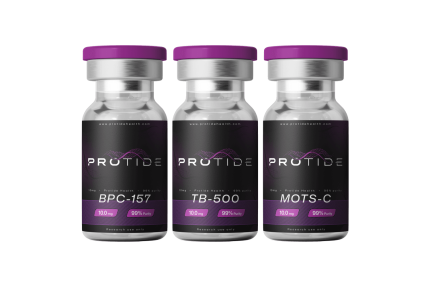
Research Bundle (BPC-157, TB-500, MOTS-c)
Original price was: $215.00.$205.00Current price is: $205.00.
Reviews
There are no reviews yet.