
Semax & Selank Blend (N-Acetyl Amidate) 10/10mg
$145.00
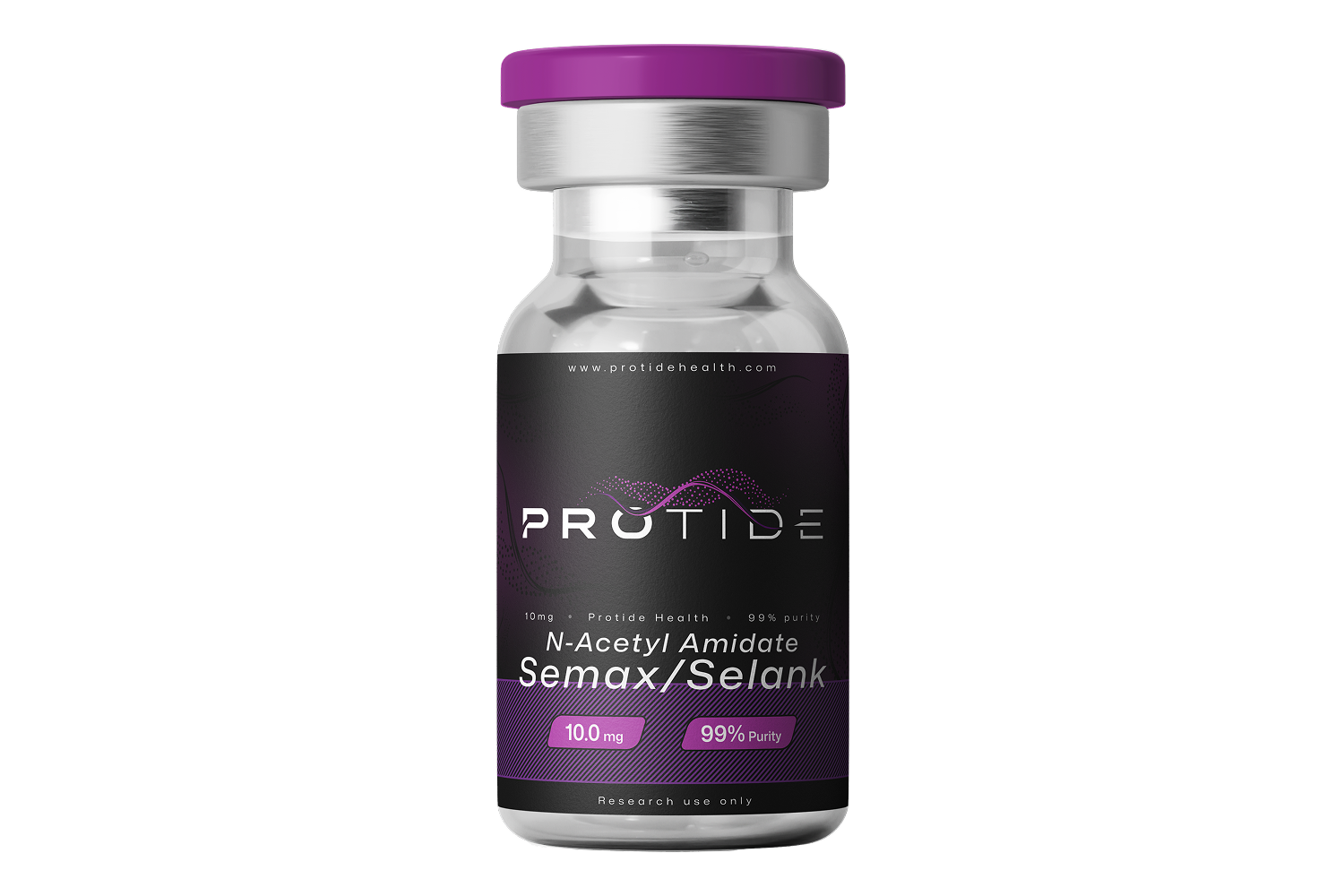
Semax and Selank 10mg/10mg product shot featuring a professionally labeled Protide Health 3mL research vial containing white to off-white lyophilized powder, with N-Acetyl Semax Amidate 10mg and N-Acetyl Selank Amidate 10mg clearly identified against a clean laboratory-style background with research-use-only labeling.


Semax and Selank Blend 10mg/10mg – Protide Health USA
Semax and Selank Peptide Overview & Technical Specifications
The Protide Health semax and selank formulation contains equal quantities of N-Acetyl Semax Amidate and N-Acetyl Selank Amidate for a total peptide content of 20mg.
The two peptides have different parent structures.
Semax is a synthetic ACTH(4-10)-related heptapeptide based on the sequence Met-Glu-His-Phe-Pro-Gly-Pro. In this product, the molecule is modified through N-terminal acetylation and C-terminal amidation, producing Ac-Met-Glu-His-Phe-Pro-Gly-Pro-NH₂.
The chemical identity of N-Acetyl Semax Amidate is independently cataloged in the supplied N-Acetyl Semax Amidate PubChem record, which confirms its sequence, molecular formula C39H54N10O10S, and PubChem CID 172638603.
Selank is a tuftsin-derived heptapeptide based on Thr-Lys-Pro-Arg-Pro-Gly-Pro. The version in this product is likewise N-acetylated and C-terminally amidated, giving the supplied sequence Ac-Thr-Lys-Pro-Arg-Pro-Gly-Pro-NH₂.
This semax and selank research blend is intended for controlled studies examining regulatory-peptide chemistry, neurochemical signaling, peptide modification, gene expression, and other experimental molecular pathways.
Technical Specifications
Blend
- Product Name: N-Acetyl Semax & N-Acetyl Selank Blend
- Total Quantity: 20mg
- N-Acetyl Semax Amidate: 10mg
- N-Acetyl Selank Amidate: 10mg
- Form: Lyophilized powder
- Vial Size: 3mL
- Purity: 99%
- Testing: HPLC-MS verified; third-party tested
- Appearance: White to off-white lyophilized powder
- Solubility: Soluble in water
- Storage: Store sealed at ≤6°C and protected from heat, light, and moisture
N-Acetyl Semax Amidate
- Classification: N-acetylated, C-amidated ACTH(4-10)-related heptapeptide analogue
- Sequence: Ac-Met-Glu-His-Phe-Pro-Gly-Pro-NH₂
- CAS Number: 2920938-90-3
- PubChem CID: 172638603
- Molecular Formula: C39H54N10O10S
- Molecular Weight: Approximately 855.0 g/mol
- Synonyms: NA-Semax-Amidate, Ac-Semax-NH₂
N-Acetyl Selank Amidate
- Classification: N-acetylated, C-amidated tuftsin-derived heptapeptide analogue
- Sequence: Ac-Thr-Lys-Pro-Arg-Pro-Gly-Pro-NH₂
- Synonyms: N-Acetyl Selank Amidate, Ac-Selank-NH₂
Semax and Selank Mechanism & Research Context
Research on semax and selank originates primarily from studies of their parent peptides and, to a lesser extent, specific terminally modified derivatives.
Semax research has examined neurotrophin-associated signaling, monoaminergic systems, metal-ion interactions, gene expression, and other neurochemical pathways. Selank research has included GABA-associated signaling, neurotransmission-related gene expression, neurotrophin biology, and regulatory-peptide activity.
Researchers can explore the broader body of Semax and Selank research indexed by PubMed for peer-reviewed studies involving these peptide families.
However, an important distinction must be maintained: results produced with standard Semax, standard Selank, or N-acetylated variants should not automatically be attributed to the exact N-acetylated and C-amidated dual formulationsold here.
Preclinical Research Applications
Neurotrophin and Gene-Expression Research
Parent Semax has been investigated in experimental systems involving BDNF and TrkB expression.
In a rat hippocampal model, researchers reported changes in BDNF and TrkB expression following Semax exposure. These observations contributed to broader research into the relationship between short regulatory peptides and neurotrophin-associated signaling.
Selank has also been examined in gene-expression studies. Experimental research in rat frontal cortex evaluated dozens of neurotransmission-related genes and reported changes involving GABA receptors, transporters, ion channels, and other signaling components.
These studies provide a research foundation for investigating semax and selank peptides, but they were not performed using this exact modified 10mg/10mg formulation.
GABAergic Signaling Research
A major area of Selank research concerns GABA-associated pathways.
Published experiments have examined changes in neurotransmission-related gene expression following Selank exposure and explored possible relationships with GABAergic signaling.
Separate experiments using IMR-32 neuroblastoma cells examined Selank in combination with GABA and other compounds. Those results demonstrated that the peptide’s molecular activity may depend substantially on cellular and experimental context.
Therefore, the semax and selank combination provides a potential laboratory framework for comparative peptide-signaling experiments without establishing a single confirmed mechanism for the blend.
Monoaminergic Research
Parent Semax has also been investigated in animal models involving dopamine- and serotonin-associated neurochemistry.
Published rodent experiments measured changes in serotonin metabolites and interactions with dopaminergic responses under controlled experimental conditions.
These studies are relevant to basic neurochemical research but do not establish human cognitive, psychiatric, or therapeutic outcomes.
BDNF-Associated Selank Research
Parent Selank has been investigated in animal experiments examining brain-derived neurotrophic factor.
Research involving rat hippocampal and prefrontal-cortex tissue has reported changes in BDNF-associated measurements under specific experimental conditions.
Together with Semax research, this makes neurotrophin signaling one area of scientific interest when investigating selank and semax peptide families.
Peptide Modification and Stability Research
The product differs structurally from standard Semax and Selank because both termini are modified.
N-terminal acetylation chemically blocks the free N-terminal amino group, while C-terminal amidation converts the terminal carboxyl group into an amide.
These changes alter charge characteristics and molecular structure and may influence interactions with enzymes or other experimental systems.
A peer-reviewed study specifically examining N-acetyl Semax found that N-terminal acetylation changed its coordination behavior with copper ions compared with unmodified Semax. This demonstrates why findings for one peptide form should not automatically be applied to another.
The C-amidated version in this semax and selank blend has an additional structural modification, so direct experimental verification remains necessary.
Research Evidence for the Exact Modified Blend
The scientific distinction between parent peptides and modified analogues is particularly important for this product.
There is substantial published literature on standard Semax and Selank, and some research exists on N-acetyl Semax. However, peer-reviewed evidence directly characterizing N-Acetyl Semax Amidate plus N-Acetyl Selank Amidate as one fixed 10mg/10mg blend is limited.
Accordingly:
- Parent Semax findings should not automatically be assigned to Ac-Semax-NH₂.
- Parent Selank findings should not automatically be assigned to Ac-Selank-NH₂.
- N-terminal acetylation changes molecular structure.
- C-terminal amidation creates another chemically distinct terminal state.
- Combining the two modified peptides does not by itself demonstrate synergy.
- Biological findings from animal models or cultured cells do not establish equivalent human effects.
The semax and selank formulation is therefore best positioned as an experimental laboratory material for controlled comparative and mechanistic research.
Lyophilized Research Format
The blend is supplied as white to off-white lyophilized powder in a 3mL research vial.
Lyophilization removes water from a frozen material under reduced pressure and is widely used in laboratory peptide preparation to create dry research material.
According to the supplied product specification, the unopened material should be stored sealed at ≤6°C, protected from heat, light, and moisture.
No nasal-spray, injection, dosage, administration, or human-use instructions are provided or implied.
Research Limitations
Research surrounding semax and selank includes biochemical experiments, cultured cells, gene-expression studies, animal models, and limited work on selected chemically modified analogues.
Important limitations include:
- Much of the published evidence concerns the parent peptides rather than their N-acetylated/C-amidated forms.
- Results from standard Semax cannot automatically be attributed to N-Acetyl Semax Amidate.
- Results from standard Selank cannot automatically be attributed to N-Acetyl Selank Amidate.
- Cell-culture findings do not establish effects in intact humans.
- Animal experiments cannot establish equivalent human outcomes.
- Changes in BDNF, TrkB, GABA-associated genes, or monoamine markers are experimental endpoints rather than proof of a therapeutic effect.
- Combining two peptides does not demonstrate additive or synergistic activity.
Protide Health therefore supplies the material solely for qualified laboratory experimentation.
Literature & Citation Index
Semax, an Analog of ACTH(4-10) With Cognitive Effects, Regulates BDNF and TrkB Expression in the Rat Hippocampus
Authors: Oleg V. Dolotov et al.
Journal: Brain Research
Year: 2006
PMID: 16996037
DOI: 10.1016/j.brainres.2006.07.108
Research Context: Rat hippocampal BDNF and TrkB expression following parent Semax exposure.
Influence of the N-Terminus Acetylation of Semax on Copper(II) and Zinc(II) Coordination and Biological Properties
Authors: Antonio Magrì et al.
Journal: Journal of Inorganic Biochemistry
Year: 2016
PMID: 27586814
DOI: 10.1016/j.jinorgbio.2016.08.013
Research Context: Chemical and biological consequences of N-terminal acetylation of Semax.
Selank Administration Affects the Expression of Some Genes Involved in GABAergic Neurotransmission
Authors: Anastasiya Volkova et al.
Journal: Frontiers in Pharmacology
Year: 2016
PMID: 26924987
DOI: 10.3389/fphar.2016.00031
Research Context: Rat frontal-cortex gene-expression changes involving neurotransmission and GABA-associated pathways.
GABA, Selank, and Olanzapine Affect the Expression of Genes Involved in GABAergic Neurotransmission in IMR-32 Cells
Year: 2017
PMID: 28293190
Research Context: Cell-culture investigation of Selank, GABA, and GABAergic gene-expression responses.
Selank, Peptide Analogue of Tuftsin, and BDNF Content in Experimental Rat Models
Year: 2019
PMID: 31625062
DOI: 10.1007/s10517-019-04588-9
Research Context: Parent Selank and BDNF-associated measurements in hippocampal and prefrontal-cortex research.
Related Protide Health Research Products
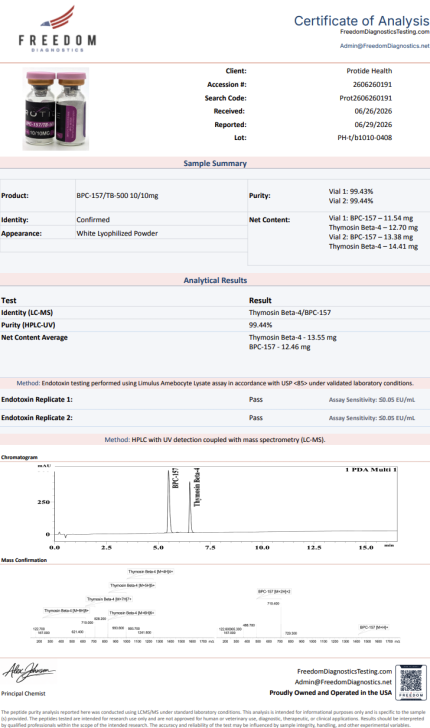
Researchers evaluating other multi-peptide laboratory formulations can also review the Glow Blend GHK-Cu, BPC-157 & TB-500 as a structurally distinct research blend.
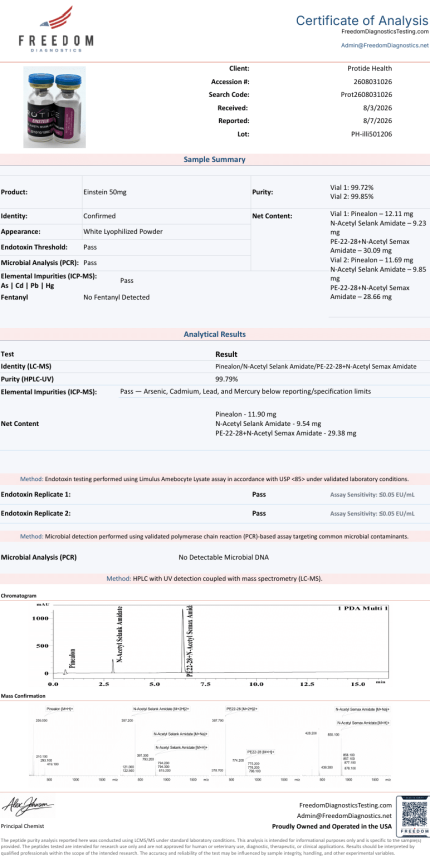
The Illumineuro Einstein Peptide Blend provides another Protide Health multi-component peptide formulation intended for a separate experimental research context.
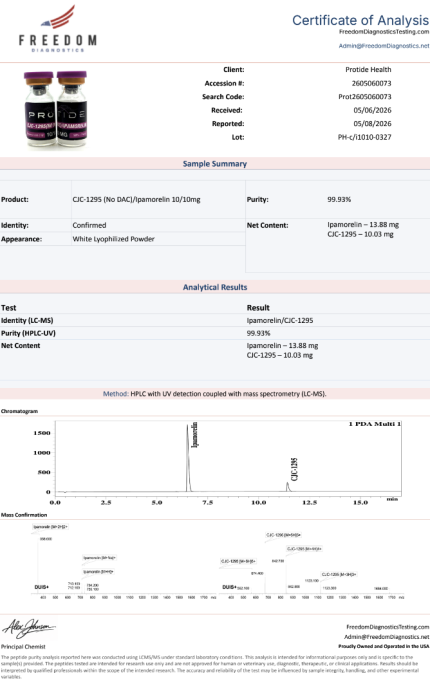
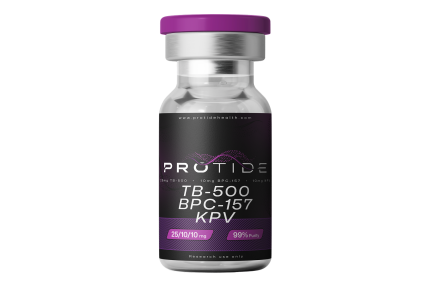
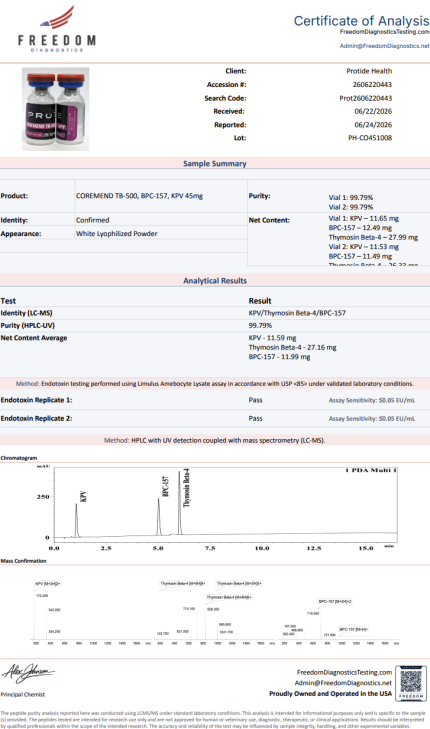
Researchers may also compare the Klow Blend GHK-Cu, KPV, BPC-157 & TB-500 when examining research formulations containing multiple chemically distinct peptides.
These products have different compositions and should not be interpreted as mechanistically equivalent to N-Acetyl Semax Amidate or N-Acetyl Selank Amidate.
Frequently Asked Questions
What is the Semax and Selank blend?
The semax and selank product is a dual-peptide research formulation containing 10mg N-Acetyl Semax Amidate and 10mg N-Acetyl Selank Amidate. Both peptides are N-terminally acetylated and C-terminally amidated.
What is the difference between Selank and Semax in this formulation?
Semax is based on the ACTH(4-10)-related MEHFPGP sequence, while Selank is based on the tuftsin-derived TKPRPGP sequence. The two compounds therefore have different parent structures and different bodies of experimental research.
Are these the same as standard Semax and Selank?
No. The semax and selank compounds in this blend contain both N-terminal acetylation and C-terminal amidation. Those structural modifications distinguish them from the standard parent peptides.
What does research on Selank and Semax peptides examine?
Research on the parent molecules includes neurotrophin signaling, BDNF-associated pathways, gene expression, GABA-associated signaling, monoaminergic systems, and other neurochemical processes. Evidence for the exact doubly modified blend remains much more limited.
What purity is specified?
The supplied specification states 99% purity, with HPLC-MS verification and third-party testing.
What form is the blend supplied in?
The product contains 10mg of each peptide and is supplied as white to off-white lyophilized powder in a 3mL vial.
Is this a Semax and Selank nasal spray?
No. This Protide Health product is supplied as lyophilized laboratory research material. It is not presented as a nasal spray, injectable product, pharmaceutical preparation, or other human-use formulation.
Is this product intended for human use?
No. It is supplied exclusively for biochemical analysis, in-vitro studies, molecular research, analytical testing, and qualified preclinical experimentation.
Laboratory Terms & Compliance
Laboratory Research Use Only
This product is supplied exclusively for laboratory research, analytical testing, in-vitro studies, preclinical research, and qualified scientific experimentation.
It is not intended for human or veterinary consumption, medical use, diagnostic use, therapeutic use, psychiatric use, cognitive enhancement, or clinical administration.
No dosage, administration, nasal-spray, injection, or other human-use instructions are provided.
The purchaser is responsible for appropriate laboratory handling, storage, and use in accordance with applicable institutional, federal, state, and local requirements.
For research use only.


MAECENAS IACULIS
Vestibulum curae torquent diam diam commodo parturient penatibus nunc dui adipiscing convallis bulum parturient suspendisse parturient a.Parturient in parturient scelerisque nibh lectus quam a natoque adipiscing a vestibulum hendrerit et pharetra fames nunc natoque dui.
ADIPISCING CONVALLIS BULUM
- Vestibulum penatibus nunc dui adipiscing convallis bulum parturient suspendisse.
- Abitur parturient praesent lectus quam a natoque adipiscing a vestibulum hendre.
- Diam parturient dictumst parturient scelerisque nibh lectus.
Scelerisque adipiscing bibendum sem vestibulum et in a a a purus lectus faucibus lobortis tincidunt purus lectus nisl class eros.Condimentum a et ullamcorper dictumst mus et tristique elementum nam inceptos hac parturient scelerisque vestibulum amet elit ut volutpat.
Related products
BPC-157 & TB-500 “Wolverine” Blend
Price range: $145.00 through $305.00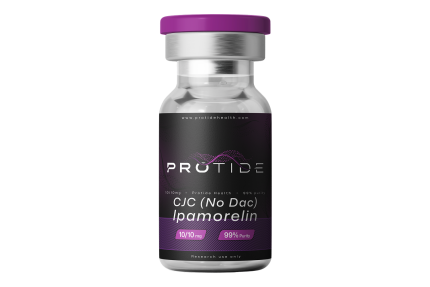
CJC-1295 (No Dac) & Ipamorelin Blend
Price range: $75.00 through $125.00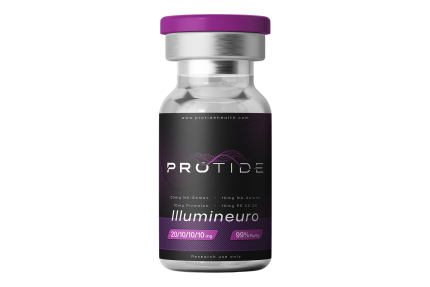
Reviews
There are no reviews yet.