
Tesamorelin, Ipamorelin & CJC-1295 (No DAC) Blend 12mg
$120.00
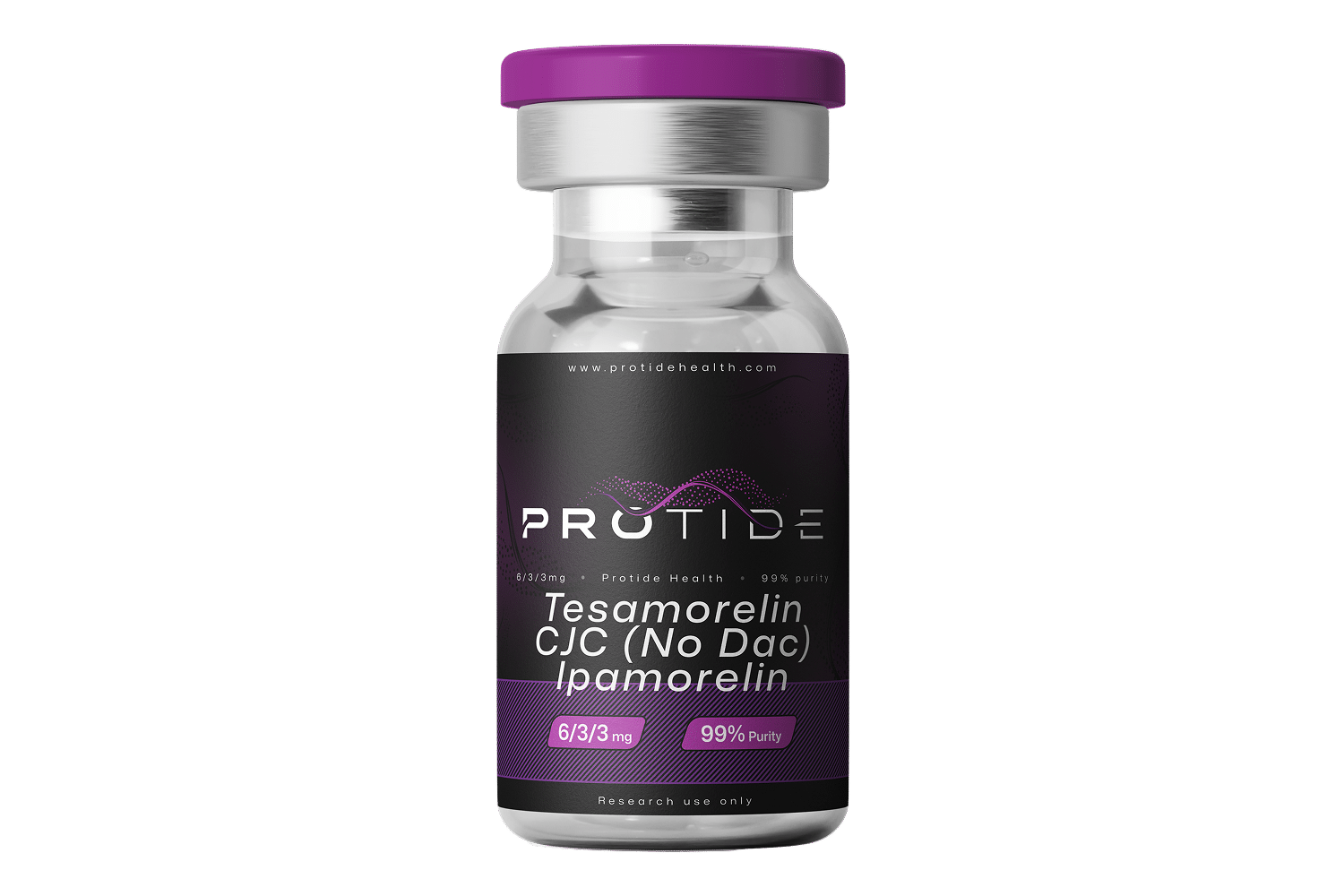
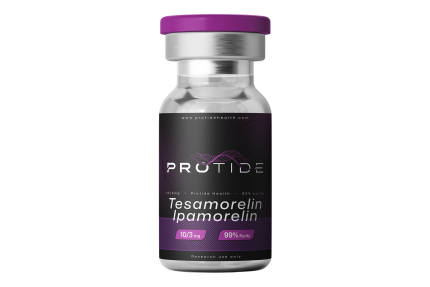
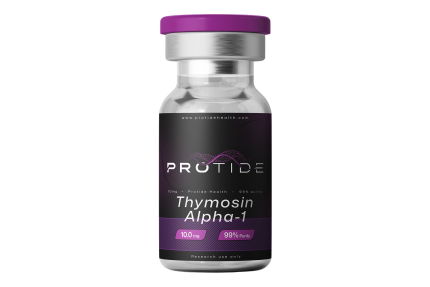
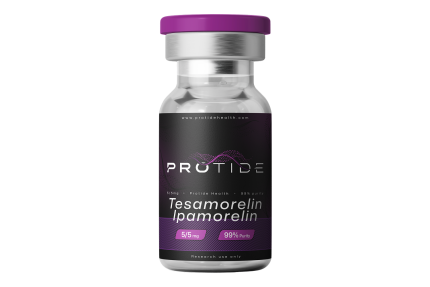
Tesamorelin ipamorelin blend 12mg product shot featuring a professionally labeled Protide Health 3mL research vial containing white to off-white lyophilized powder, clearly identifying the 6mg Tesamorelin, 3mg Ipamorelin, and 3mg CJC-1295 No DAC composition against a clean laboratory-style background with research-use-only labeling.


Tesamorelin Ipamorelin Blend with CJC-1295 No DAC 12mg – Protide Health USA
Tesamorelin Ipamorelin Blend Overview & Technical Specifications
The tesamorelin ipamorelin blend supplied by Protide Health is a three-component research formulation containing 6mg Tesamorelin, 3mg Ipamorelin, and 3mg CJC-1295 No DAC, for a total peptide content of 12mg.
Although all three compounds are studied within growth-hormone-axis research, they are structurally and pharmacologically distinct.
Tesamorelin is a synthetic 44-amino-acid analogue of growth hormone-releasing hormone (GHRH). It is modified at its N-terminus relative to native GHRH and is studied primarily through GHRH receptor-mediated endocrine signaling.
Ipamorelin is a synthetic pentapeptide with the sequence Aib-His-D-2-Nal-D-Phe-Lys-NH₂. Published research characterizes it as a selective growth-hormone secretagogue acting through the growth-hormone secretagogue receptor pathway.
CJC-1295 No DAC, often associated with Modified GRF(1-29), is a 29-amino-acid GHRH analogue lacking the albumin-binding Drug Affinity Complex found in the long-acting DAC form.
This tesamorelin ipamorelin blend therefore provides a laboratory platform for studying complementary GHRH-receptor and growth-hormone-secretagogue signaling within carefully controlled experimental models.
Technical Specifications
Blend
- Total Quantity: 12mg
- Tesamorelin: 6mg
- Ipamorelin: 3mg
- CJC-1295 No DAC: 3mg
- Form: Lyophilized powder
- Vial Size: 3mL
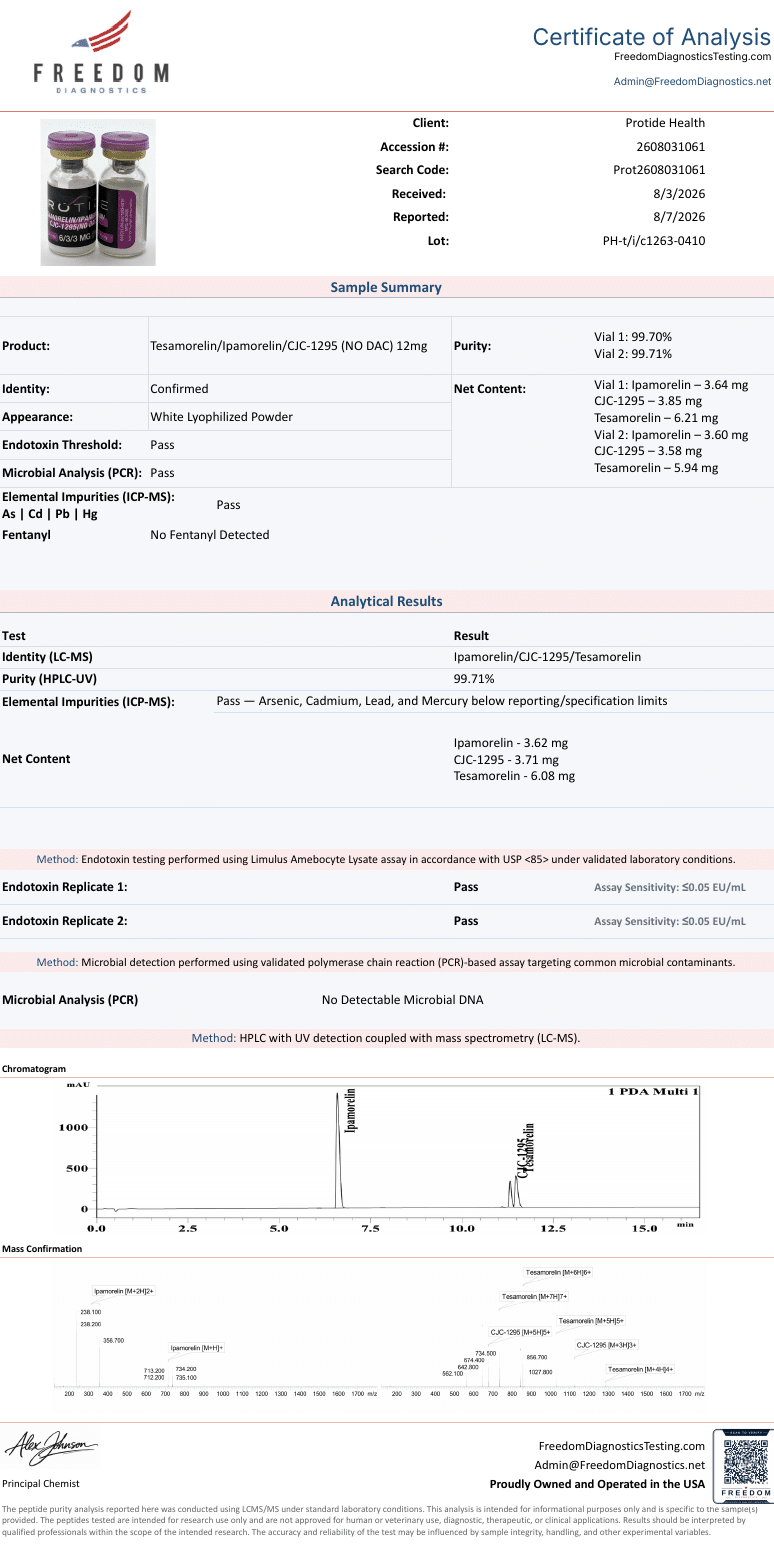
- Purity: 99%
- Testing: HPLC-MS verified; third-party tested
- Appearance: White to off-white powder
- Solubility: Soluble in water
- Storage: Store sealed at ≤6°C, protected from heat, light, and moisture
Tesamorelin
- Peptide Type: Synthetic 44-amino-acid GHRH analogue
- CAS Number: 218949-48-5
- PubChem CID: 16137828
- Molecular Formula: C221H366N72O67S
- Molecular Weight: 5135.91 g/mol
- Synonym: TH9507
- Sequence: (trans-3-hexenoic acid)-YADAIFTNSYRKVLGQLSARKLLQDIMSRQQGESNQERGARARL-NH₂
Ipamorelin
- Peptide Type: Synthetic growth-hormone-secretagogue pentapeptide
- CAS Number: 170851-70-4
- PubChem CID: 9831659
- Molecular Formula: C38H49N9O5
- Molecular Weight: 711.86 g/mol
- Synonym: NNC 26-0161
- Sequence: Aib-His-D-2-Nal-D-Phe-Lys-NH₂
CJC-1295 No DAC
- Peptide Type: Synthetic 29-amino-acid GHRH analogue
- PubChem CID: 91976842
- Molecular Formula: C152H252N44O42
- Molecular Weight: 3367.90 g/mol
- Associated Name: Modified GRF(1-29)
- Sequence: Tyr-D-Ala-Asp-Ala-Ile-Phe-Thr-Gln-Ser-Tyr-Arg-Lys-Val-Leu-Ala-Gln-Leu-Ser-Ala-Arg-Lys-Leu-Leu-Gln-Asp-Ile-Leu-Ser-Arg-NH₂
Tesamorelin Ipamorelin Blend Mechanism & Research Context
The tesamorelin ipamorelin blend is scientifically interesting because its components approach growth-hormone-axis signaling through two related but distinct receptor systems.
Tesamorelin and CJC-1295 No DAC are GHRH analogues. GHRH receptor activation on pituitary somatotroph research models is associated with G-protein signaling, adenylate cyclase activity, intracellular cyclic AMP, and downstream pathways involved in growth-hormone synthesis and release.
Ipamorelin differs mechanistically. Its original pharmacological characterization demonstrated GH-releasing activity through a GHRP-like receptor rather than through the GHRH receptor. Contemporary nomenclature identifies this signaling system with the growth-hormone secretagogue receptor, GHS-R1a.
Researchers can explore broader tesamorelin ipamorelin blend research through PubMed when evaluating individual GHRH analogues, growth-hormone secretagogues, pituitary signaling, and endocrine pathway experiments.
Importantly, combining three peptides in one research vial does not establish synergistic efficacy. The individual compounds have been studied separately far more extensively than this exact triple formulation.
Preclinical Research Applications
GHRH Receptor Signaling Research
Tesamorelin is structurally derived from GHRH and has been designed to maintain GHRH receptor activity while incorporating structural modifications intended to alter peptide stability.
In laboratory research, GHRH receptor activation is investigated for its effects on somatotroph signaling, adenylate cyclase activity, cyclic AMP formation, and regulated GH secretion.
CJC-1295 No DAC is also based on the GHRH(1-29) sequence framework, creating another experimental tool for studying this receptor system.
The presence of both compounds in the tesamorelin ipamorelin blend makes GHRH-associated receptor biology one of the most relevant mechanistic areas for qualified laboratory investigation.
Ipamorelin and GHS-R1a Research
Ipamorelin was described in its original pharmacological research as a selective growth-hormone secretagogue.
In cultured rat pituitary cells and animal models, investigators observed GH-release activity mediated through a GHRP-like receptor pathway. Pharmacological antagonist experiments distinguished this activity from direct GHRH receptor signaling.
These findings make Ipamorelin useful for comparative receptor research alongside GHRH analogues.
Tesamorelin vs Ipamorelin in Research
The search phrase tesamorelin vs ipamorelin reflects an important mechanistic distinction rather than a question of which compound is “better.”
Tesamorelin is a GHRH receptor agonist analogue, whereas Ipamorelin belongs to the growth-hormone secretagogue / GHS-R1a agonist class.
Therefore, ipamorelin vs tesamorelin research compares different receptor pathways that can converge on pituitary GH-release mechanisms.
This distinction is particularly relevant when the compounds are examined together in a tesamorelin ipamorelin blend, because observed responses cannot automatically be attributed to a single receptor pathway.
Growth-Hormone Secretory Pathway Research
Experimental work with GHRH analogues and growth-hormone secretagogues has investigated pulsatile endocrine signaling, somatotroph responsiveness, receptor selectivity, and downstream GH/IGF-associated pathways.
Ipamorelin research in cultured cells and animal systems demonstrated selective GH-secretagogue activity, while GHRH analogue research has examined direct stimulation of the GHRH receptor system.
These studies provide mechanistic context for the tesamorelin ipamorelin blend, but they do not demonstrate the behavior of this exact 6mg/3mg/3mg formulation in humans.
CJC-1295 No DAC Research Context
A critical scientific distinction exists between CJC-related peptides with and without a Drug Affinity Complex.
The best-known original CJC-1295 studies involved a DAC-containing molecule capable of albumin binding, producing prolonged exposure. Those findings should not automatically be attributed to CJC-1295 No DAC.
The No-DAC material in this product has a molecular mass of approximately 3367.9 g/mol and lacks the albumin-binding DAC moiety.
For that reason, Protide Health treats the No-DAC component as a distinct research material rather than presenting pharmacokinetic findings from long-acting CJC-1295 as though they directly establish the behavior of CJC-1295 No DAC.
Tesamorelin and Ipamorelin: Why Researchers Study Different Pathways
Tesamorelin and ipamorelin are sometimes grouped together because both are studied within GH-axis research, but their molecular targets differ.
Tesamorelin is modeled on GHRH and acts through GHRH receptor signaling. Ipamorelin is structurally unrelated to GHRH and was developed as a selective GH secretagogue.
This creates an experimental basis for studying how separate upstream receptor systems may influence overlapping endocrine signaling outputs.
The tesamorelin ipamorelin blend with CJC-1295 No DAC adds a second GHRH-related analogue to that experimental framework.
No claim of additive or synergistic biological benefit should be inferred merely from combining the peptides.
Research Limitations
Research involving the three components includes biochemical assays, cultured pituitary cells, animal models, pharmacological experiments, and—in the case of some individual compounds—human pharmaceutical research.
Several limitations are especially important:
- Most published studies evaluate these compounds individually rather than as this exact triple blend.
- Ipamorelin data from rat pituitary cultures or animal models cannot be assumed to reproduce human responses.
- Clinical research involving pharmaceutical Tesamorelin does not establish safety or efficacy for a laboratory research blend.
- Original CJC-1295 literature largely concerns the albumin-binding DAC molecule and should not be applied directly to No-DAC material.
- Changes in GH or IGF-related research endpoints do not establish therapeutic, bodybuilding, weight-loss, or performance outcomes.
- Combining compounds does not itself demonstrate pharmacological synergy.
The tesamorelin ipamorelin blend supplied by Protide Health is therefore positioned strictly as laboratory research material.
Literature & Citation Index
Ipamorelin, the First Selective Growth Hormone Secretagogue
Authors: K. Raun, B. S. Hansen, N. L. Johansen, H. Thøgersen, K. Madsen, M. Ankersen, P. H. Andersen
Journal: European Journal of Endocrinology
Year: 1998
PMID: 9849822
DOI: 10.1530/eje.0.1390552
Research Focus: Ipamorelin structure, pituitary-cell activity, GHRP-receptor signaling, and selectivity in animal research models.
Human Growth Hormone-Releasing Factor (hGRF)1-29-Albumin Bioconjugates Activate the GRF Receptor on the Anterior Pituitary in Rats
Authors: Lucie Jetté et al.
Journal: Endocrinology
Year: 2005
PMID: 15817669
DOI: 10.1210/en.2004-1286
Research Focus: Development of DAC-containing CJC-1295, GRF receptor activity, albumin conjugation, and extended exposure.
Prolonged Stimulation of Growth Hormone and IGF-I Secretion by CJC-1295
Authors: Sam L. Teichman et al.
Journal: Journal of Clinical Endocrinology & Metabolism
Year: 2006
PMID: 16352683
DOI: 10.1210/jc.2005-1536
Research Focus: Pharmacokinetic and endocrine characterization of long-acting DAC-containing CJC-1295.
Important: These CJC-1295 publications concern the long-acting DAC compound and are included to clarify the scientific distinction. Their pharmacokinetic findings should not be directly transferred to the No-DAC component in this blend.
Chemical Identity References
PubChem verifies:
- Tesamorelin: CID 16137828; C221H366N72O67S; approximately 5136 g/mol.
- Ipamorelin: CID 9831659; C38H49N9O5; approximately 711.9 g/mol; CAS 170851-70-4.
- CJC-1295 Without DAC: CID 91976842; C152H252N44O42; approximately 3367.9 g/mol.
Related Protide Health Research Products
Researchers expanding a peptide-research inventory can also review:
- Crystagen 20mg research peptide — a separate short-peptide research material with a distinct experimental context.
- DSIP research peptide — a separate peptide used in neuropeptide and signaling research.
- Epithalon 10mg research peptide — a distinct short-peptide material used in molecular and preclinical research.
These compounds have different structures and experimental targets and should not be considered substitutes for the tesamorelin ipamorelin blend.
Frequently Asked Questions
What is a tesamorelin ipamorelin blend?
A tesamorelin ipamorelin blend combines Tesamorelin and Ipamorelin within one research formulation. This Protide Health product additionally contains CJC-1295 No DAC, producing a three-component blend of 6mg Tesamorelin, 3mg Ipamorelin, and 3mg CJC-1295 No DAC.
What is the difference between tesamorelin vs ipamorelin?
The central distinction is receptor pharmacology. Tesamorelin is a synthetic GHRH analogue studied through the GHRH receptor, whereas Ipamorelin is a growth-hormone secretagogue associated with GHS-R1a signaling.
Are tesamorelin and ipamorelin the same peptide?
No. Tesamorelin and ipamorelin have different amino-acid structures, lengths, molecular targets, and pharmacological classifications. Their signaling pathways may converge on related endocrine research endpoints, but they are not structurally equivalent.
What is CJC-1295 No DAC?
CJC-1295 No DAC is a 29-amino-acid GHRH-related research peptide commonly associated with Modified GRF(1-29). The No-DAC form lacks the albumin-binding Drug Affinity Complex used in the long-acting CJC-1295 molecule.
Does research prove that the three peptides are synergistic?
No. Published research characterizes the individual components much more extensively than this exact triple formulation. The presence of multiple signaling compounds in one blend does not by itself demonstrate synergy.
What is the purity of this blend?
The supplied product specification states 99% purity, with HPLC-MS verification and third-party testing.
What form is the product supplied in?
It is supplied as 12mg total lyophilized powder in a 3mL vial, consisting of Tesamorelin 6mg, Ipamorelin 3mg, and CJC-1295 No DAC 3mg.
Is the blend intended for human use?
No. This product is supplied exclusively for analytical testing, biochemical studies, in-vitro research, receptor research, and qualified preclinical experimentation.
Laboratory Terms & Compliance
Laboratory Research Use Only
This product is supplied exclusively for laboratory research, analytical testing, in-vitro studies, preclinical research, and qualified scientific experimentation.
It is not intended for human or veterinary consumption, medical use, diagnostic use, therapeutic use, bodybuilding, performance enhancement, or clinical administration.
No dosage, dosing, administration, injection, or human-use instructions are provided.
The purchaser is responsible for appropriate laboratory handling, storage, and use in accordance with applicable institutional, federal, state, and local requirements.
For research use only.


MAECENAS IACULIS
Vestibulum curae torquent diam diam commodo parturient penatibus nunc dui adipiscing convallis bulum parturient suspendisse parturient a.Parturient in parturient scelerisque nibh lectus quam a natoque adipiscing a vestibulum hendrerit et pharetra fames nunc natoque dui.
ADIPISCING CONVALLIS BULUM
- Vestibulum penatibus nunc dui adipiscing convallis bulum parturient suspendisse.
- Abitur parturient praesent lectus quam a natoque adipiscing a vestibulum hendre.
- Diam parturient dictumst parturient scelerisque nibh lectus.
Scelerisque adipiscing bibendum sem vestibulum et in a a a purus lectus faucibus lobortis tincidunt purus lectus nisl class eros.Condimentum a et ullamcorper dictumst mus et tristique elementum nam inceptos hac parturient scelerisque vestibulum amet elit ut volutpat.
Related products
BPC-157 & TB-500 “Wolverine” Blend
Price range: $145.00 through $305.00
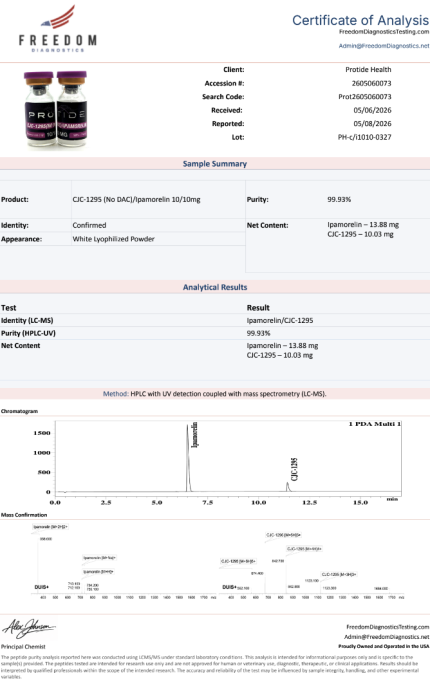
CJC-1295 (No Dac) & Ipamorelin Blend
Price range: $75.00 through $125.00
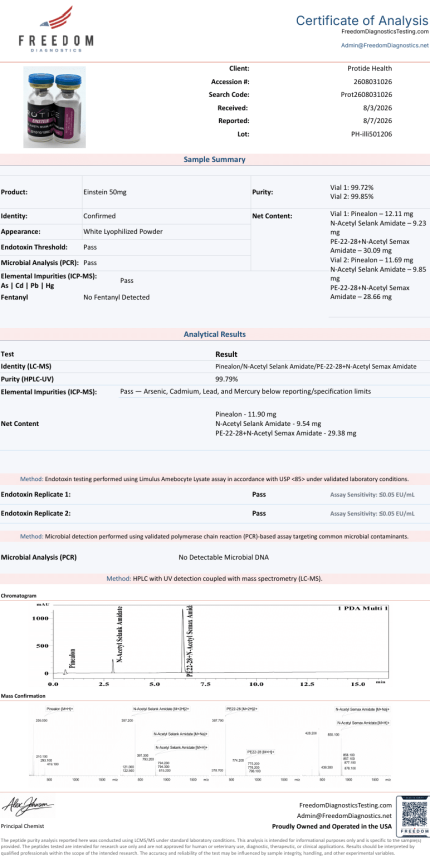
Reviews
There are no reviews yet.