
ARA-290 16mg
$80.00
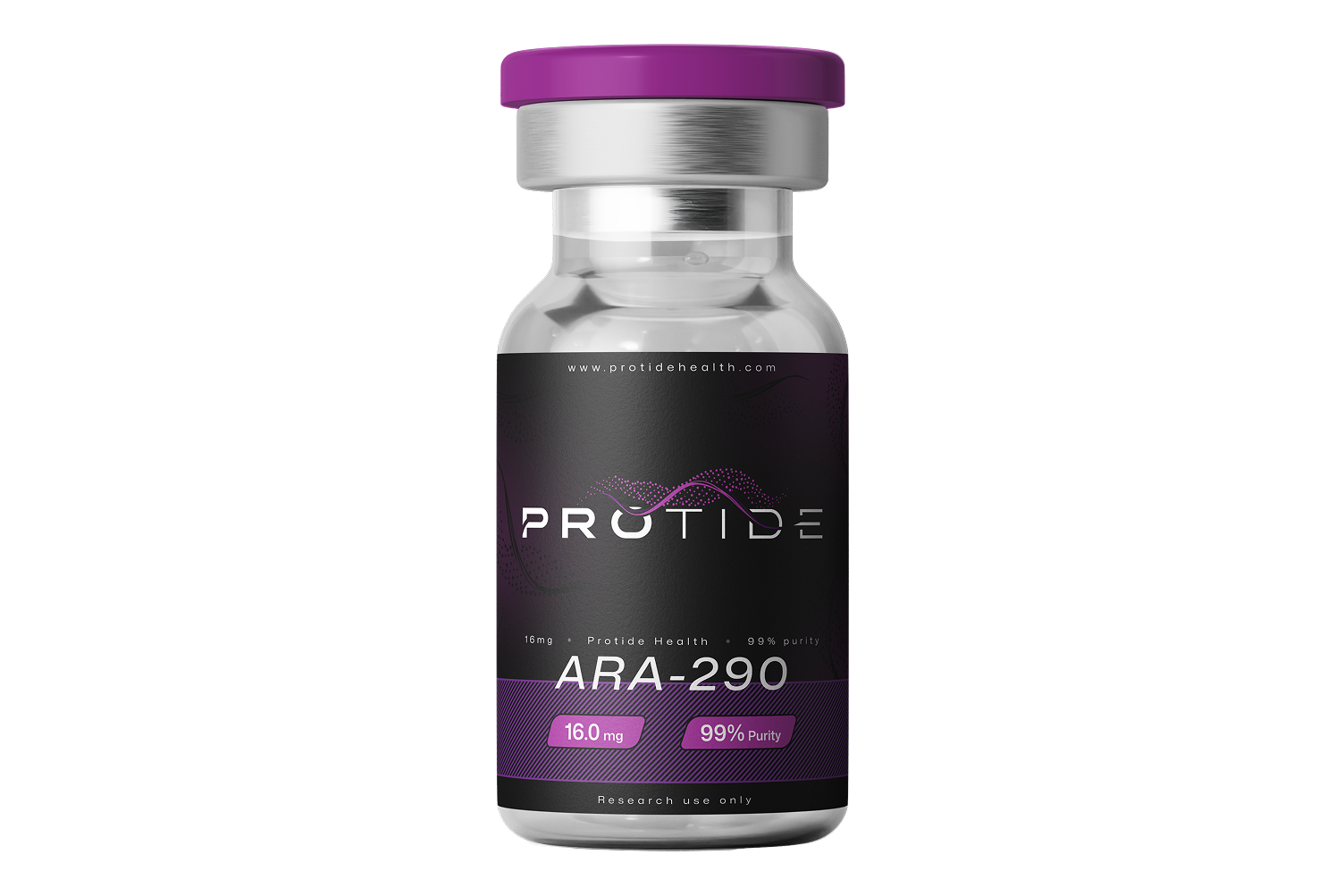
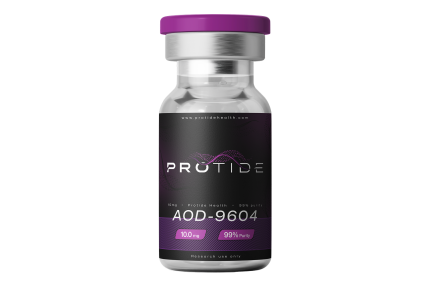
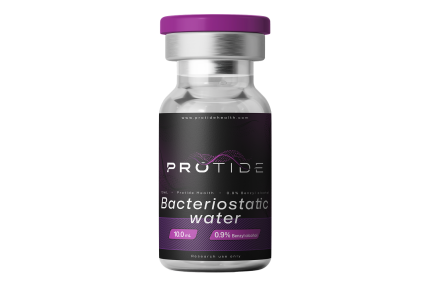
ARA 290 peptide 16mg product shot featuring a professionally labeled Protide Health 3mL research vial containing white to off-white lyophilized cibinetide material, with the pGlu-Glu-Gln-Leu-Glu-Arg-Ala-Leu-Asn-Ser-Ser 11-amino-acid identity, 99% purity, HPLC-MS verification, and laboratory-research-only labeling clearly displayed against a clean scientific background.


ARA 290 Peptide 16mg – Protide Health USA
ARA 290 Peptide Overview & Technical Specifications
ARA 290 peptide is a synthetic 11-amino-acid, non-hematopoietic peptide derived from the tissue-protective structural region of erythropoietin.
It is also known as:
- ARA-290
- ARA 290
- Cibinetide
- PHBSP
- PH-BSP
Unlike full-length erythropoietin, ARA 290 peptide was designed to preserve tissue-protective signaling while minimizing erythropoietic activity.
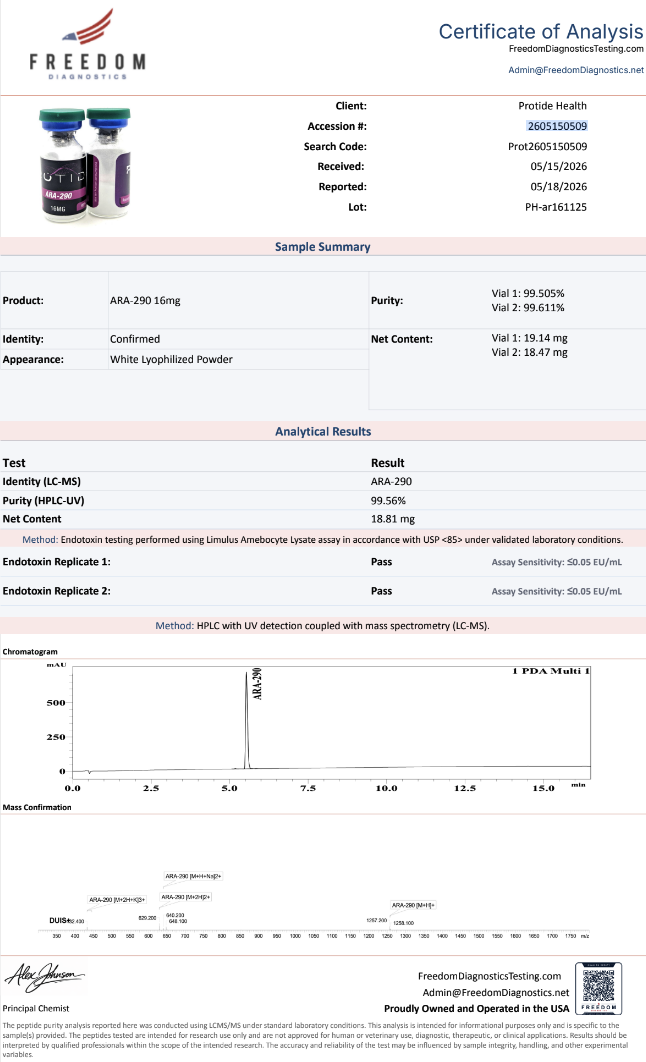
Protide Health supplies ARA 290 peptide as 16mg of 99% purity, HPLC-MS verified, third-party tested lyophilized research material in a 3mL vial.
Published research has investigated ARA-290 in areas including:
- EPOR/CD131-associated signaling
- Innate repair receptor biology
- Small-fiber neuropathy
- Neuroinflammatory models
- Endothelial-cell biology
- Ischemic tissue research
- Microglial signaling
- Tissue-protective pathways
These findings represent experimental and clinical-development research and do not establish therapeutic use for Protide Health material.
Technical Specifications
- Product Name: ARA-290
- Alternative Name: Cibinetide
- Quantity: 16mg
- Form: Lyophilized powder
- Vial Size: 3mL
- Purity: 99%
- Testing: HPLC-MS verified; third-party tested
- Peptide Type: Synthetic non-hematopoietic erythropoietin-derived peptide
- Peptide Length: 11 amino acids
- Sequence: pGlu-Glu-Gln-Leu-Glu-Arg-Ala-Leu-Asn-Ser-Ser
- PubChem Sequence Representation: XEQLERALNSS
- CAS Number: 1208243-50-8
- PubChem CID: 91810664
- Molecular Formula: C51H84N16O21
- Molecular Weight: approximately 1257.30 g/mol
- Appearance: White to off-white lyophilized powder
- Solubility: Soluble in water
- Storage: Store sealed at ≤6°C and protected from heat, light, and moisture
- Research Use: EPOR/CD131, neuropathy, endothelial, inflammatory, biochemical, cellular, analytical, and qualified preclinical research only
PubChem identifies cibinetide/ARA-290 as CID 91810664 and confirms the sequence, molecular formula, molecular weight, and CAS number.
ARA 290 Peptide Chemical Structure
The ARA 290 peptide sequence is:
pGlu-Glu-Gln-Leu-Glu-Arg-Ala-Leu-Asn-Ser-Ser
The N-terminal residue is pyroglutamate.
PubChem represents the peptide as:
H-Pyr-Glu-Gln-Leu-Glu-Arg-Ala-Leu-Asn-Ser-Ser-OH
This sequence was designed from the three-dimensional structure of erythropoietin rather than simply representing an arbitrary linear segment of the native hormone.
What Is ARA-290?
ARA-290 is an engineered erythropoietin-derived peptide designed to investigate tissue-protective signaling without the classical hematopoietic effects associated with full-length EPO.
The peptide is generally discussed in connection with:
- Tissue protection
- Innate repair signaling
- Neuroinflammation
- Peripheral nerve injury
- Endothelial repair
- Ischemic injury
- Metabolic and neuropathy research
Its alternative development name is cibinetide.
ARA 290 Peptide & the Innate Repair Receptor
One of the key mechanistic research areas for ARA 290 peptide involves a receptor complex commonly described as the:
Innate Repair Receptor
or:
EPOR/CD131 heteroreceptor
This receptor system is distinct from the classical erythropoietic signaling pathway associated with red-blood-cell production.
Published work has described ARA-290 as selectively interacting with tissue-protective receptor signaling involving:
- Erythropoietin receptor components
- CD131
- Anti-inflammatory pathways
- Cellular survival
- Tissue repair
This receptor selectivity forms the basis for much of the compound’s research interest.
ARA-290 vs Erythropoietin
Full-length erythropoietin is a glycoprotein hormone best known for regulating erythropoiesis.
By contrast, ARA 290 peptide was developed to investigate non-hematopoietic signaling.
Erythropoietin
Research characteristics include:
- Classical EPOR signaling
- Erythroid-cell development
- Red-blood-cell production
- Hematopoietic effects
ARA-290
Research characteristics include:
- 11-amino-acid structure
- No intended hematopoietic activity
- EPOR/CD131-associated tissue-protective signaling
- Neuropathy and inflammatory research
- Endothelial and ischemic models
These compounds should not be treated as interchangeable.
ARA 290 Peptide & Neuropathy Research
A major area of ARA 290 peptide research involves peripheral neuropathy.
Animal studies have examined models of:
- Nerve injury
- Mechanical allodynia
- Hyperalgesia
- Microglial activation
- Astrocyte activation
A rat study reported dose-related reductions in mechanical allodynia after ARA-290 exposure and linked the response to changes in spinal microglial activity.
Another study using rats and β-common-receptor knockout mice examined long-term neuropathic-pain responses and provided evidence supporting involvement of the β-common receptor pathway.
These are experimental findings and do not establish a treatment indication for Protide Health material.
ARA 290 Peptides & Small-Fiber Neuropathy Research
The phrase ARA 290 peptides is also associated with human research involving small-fiber neuropathy.
Phase II clinical research evaluated ARA-290 in patients with sarcoidosis-associated small-fiber neuropathy.
Published findings included changes in:
- Neuropathic symptom scores
- Corneal nerve fibers
- Sensory thresholds
- Quality-of-life measurements
- Physical functioning
The review literature described these findings as encouraging but investigational.
Protide Health does not present these observations as proof that research-grade ARA-290 treats neuropathy.
ARA 290 Peptide & Type 2 Diabetes Research
A phase 2 study also evaluated ARA-290 in individuals with type 2 diabetes and painful neuropathy.
Reported experimental outcomes included:
- HbA1c changes
- Lipid-profile changes
- Neuropathic symptom scores
- Corneal nerve-fiber density
The investigators concluded that the peptide warranted continued clinical evaluation.
Those findings involved a controlled investigational clinical formulation and do not establish the efficacy of independently supplied laboratory material.
ARA 290 Peptide Benefits: Evidence Context
The phrase ARA 290 peptide benefits commonly reflects interest in human outcomes.
Published research has investigated ARA-290 in:
- Neuropathy
- Neuroinflammation
- Endothelial repair
- Small-fiber regeneration
- Ischemic models
- Metabolic signaling
- Tissue-protective pathways
- Cellular survival
These findings do not establish that Protide Health ARA 290 peptide:
- Treats diabetic neuropathy
- Treats sarcoidosis
- Relieves chronic pain
- Repairs nerves in humans
- Treats ischemic injury
- Treats diabetes
- Produces clinically established tissue regeneration
The evidence remains investigational.
ARA-290 Peptide Benefits & Endothelial Research
A separate research area involves endothelial progenitor cells.
One study investigated ARA-290 as an agonist of EPOR/CD131 signaling in endothelial colony-forming cells.
The researchers reported experimental changes involving:
- Cell proliferation
- Migration
- Resistance to oxidative-stress-induced apoptosis
- Angiogenic potential
- Homing to ischemic tissue
The research combined in-vitro systems with mouse ischemia models.
This provides mechanistic evidence for endothelial-repair research but does not establish human vascular therapy.
ARA 290 & Ischemic Research
ARA-290 has also been examined in ischemic tissue models.
Experimental systems include:
- Hindlimb ischemia
- Retinal ischemia
- Cerebral ischemia
- Endothelial-cell injury
A 2024 mouse study examined the peptide in cerebral ischemic stroke models and reported tissue-protective signaling through the β-common receptor pathway.
Again, these findings are preclinical.
ARA 290 Peptide & Retinal Research
Cibinetide has been investigated in ischemic-retina models involving endothelial colony-forming cells.
Research has examined whether the compound influences:
- Pro-survival signaling
- Vascular regeneration
- Endothelial-cell function
- Inflammatory signaling
These experiments support the broader concept of tissue-protective receptor research associated with ARA 290 peptide.
ARA 290 & Kidney Injury Research
Experimental ARA-290 research also includes nephrotoxicity models.
A study involving cisplatin-induced kidney injury described ARA-290 as an 11-amino-acid non-hematopoietic peptide interacting selectively with the innate repair receptor.
The study examined:
- Apoptosis
- Inflammation
- Kidney injury markers
- Tissue-protective signaling
These findings were experimental and do not establish treatment of kidney disease.
ARA-290 Peptide Dosage Search Context
The phrase ARA-290 peptide dosage generally concerns human administration.
Protide Health does not provide human dosing instructions.
The 16mg quantity shown on this page represents total research material contained in the vial.
It is not a recommended human dose.
No guidance is provided for:
- Human injection
- Daily administration
- Neuropathy protocols
- Pain-management schedules
- Treatment cycles
- Body-weight calculations
- Reconstitution for human administration
Published clinical-study dosing should not be transferred to independently supplied laboratory material.
ARA 290 Peptide Dosage Search Context
The phrase ARA 290 peptide dosage refers to the same human-use intent.
Although historical clinical trials used defined experimental doses, those studies involved:
- Controlled investigational formulations
- Medical supervision
- Defined participant populations
- Protocol-specific monitoring
- Regulated study procedures
Those conditions do not establish an appropriate dose for research-grade ARA-290.
ARA 290 Peptide & Microglial Research
Microglia are resident immune cells of the central nervous system.
In neuropathic injury models, activated microglia can participate in inflammatory and sensitization pathways.
ARA-290 research has examined whether tissue-protective receptor signaling influences:
- Microglial activation
- Astrocyte responses
- Neuroinflammatory signaling
- Allodynia
Animal studies reported that reductions in mechanical allodynia occurred alongside suppression of spinal microglial responses.
ARA 290 Peptide & CD131
CD131 is also known as the β-common receptor subunit.
It participates in receptor systems involving several cytokines and has been proposed as part of the tissue-protective receptor complex associated with non-hematopoietic erythropoietin signaling.
ARA-290 research frequently focuses on:
- EPOR/CD131 interaction
- Tissue protection
- Anti-inflammatory signaling
- Cellular survival
- Repair responses
This pathway is central to the distinction between cibinetide and conventional hematopoietic EPO signaling.
ARA-290 & Inflammation Research
Inflammation is another major research theme.
Experimental ARA-290 studies have investigated:
- Cytokine-associated signaling
- Microglial activation
- Oxidative injury
- Apoptosis
- Endothelial inflammation
- Tissue-damage responses
The compound is often described in research literature as anti-inflammatory or tissue protective.
These are experimental descriptors, not approved therapeutic claims.
ARA-290 & Nerve-Fiber Research
Clinical-development research has used corneal confocal microscopy to assess small nerve fibers.
Studies in neuropathy populations have examined changes in:
- Corneal nerve-fiber density
- Neuropathic symptoms
- Sensory thresholds
This methodology provides an objective research endpoint in addition to subjective symptom scales.
However, evidence from investigational clinical trials should not be generalized to laboratory-grade products.
ARA 290 Peptide Research Applications
Qualified laboratories may investigate ARA 290 peptide in research involving:
- EPOR/CD131 signaling
- Innate repair receptor biology
- Peripheral nerve injury
- Small-fiber neuropathy models
- Neuroinflammation
- Microglial signaling
- Endothelial-cell biology
- Ischemic injury
- Oxidative stress
- Apoptosis
- Tissue-protective pathways
- Analytical peptide characterization
Appropriate model-specific controls should be included.
Related Protide Health Research Products
Researchers comparing other gastrointestinal or receptor-signaling peptide systems may review GLP-2 for a chemically and mechanistically distinct glucagon-like peptide research model.
The SNAP-8 10mg research peptide provides a separate synthetic peptide system with different molecular targets and experimental applications.
Researchers may also examine DSIP for a structurally distinct nonapeptide investigated historically in neurophysiological and sleep-related research.
These products should not be considered chemically or mechanistically interchangeable with ARA 290 peptide.
Research Format & Storage
Protide Health supplies ARA 290 peptide as:
- Quantity: 16mg
- Form: Lyophilized powder
- Vial Size: 3mL
- Purity: 99%
- Testing: HPLC-MS verified
- Verification: Third-party tested
- Appearance: White to off-white
- Solubility: Soluble in water
Storage specifications:
- Store at ≤6°C
- Keep sealed
- Protect from heat
- Protect from direct light
- Protect from moisture
These specifications describe laboratory storage characteristics only.
Research Limitations
Several limitations should be considered when interpreting ARA-290 research:
- ARA-290 remains an investigational peptide rather than an established approved therapy.
- Many mechanistic findings come from animal or cellular models.
- Neuropathy studies involved controlled investigational formulations.
- Positive clinical findings require larger independent confirmation.
- EPOR/CD131 signaling is mechanistically distinct from classical hematopoietic EPO signaling.
- Tissue-protective findings do not establish universal regenerative effects.
- Animal pain findings do not establish human analgesic efficacy.
- Endothelial-cell findings do not establish vascular treatment.
- Metabolic findings from type 2 diabetes research are exploratory.
- The 16mg quantity represents vial contents rather than a human dose.
- Protide Health ARA-290 is not an FDA-approved neuropathy, pain, diabetes, or tissue-repair product.
For these reasons, ARA 290 peptide is supplied strictly for qualified laboratory research.
Literature & Citation Index
ARA 290, a Nonerythropoietic Peptide Engineered From Erythropoietin, Improves Metabolic Control and Neuropathic Symptoms in Patients With Type 2 Diabetes
Year: 2015
PMID: 25387363
DOI: 10.2119/molmed.2014.00215
Research Context: ARA-290, type 2 diabetes, painful neuropathy, HbA1c, lipid markers, PainDetect scores, and corneal nerve-fiber density.
This was a phase 2 clinical investigation using an investigational formulation.
ARA 290 for Treatment of Small Fiber Neuropathy in Sarcoidosis
Year: 2014
PMID: 24555851
DOI: 10.1517/13543784.2014.892072
Research Context: Sarcoidosis, small-fiber neuropathy, pain scores, corneal nerve fibers, sensory thresholds, and quality-of-life endpoints.
ARA 290 Produces Long-Term Relief of Neuropathic Pain Coupled With Suppression of the Spinal Microglia Response
Year: 2014
PMID: 24529189
DOI: 10.1186/1744-8069-10-13
Research Context: Rat nerve-injury models, mechanical allodynia, microglia, astrocytes, and dose-response research.
ARA290 in Rats and β-Common Receptor Knockout Mice
Year: 2011
PMID: 21873879
DOI: 10.1097/ALN.0b013e31822fcefd
Research Context: Neuropathic pain, β-common receptor signaling, peripheral nerve injury, inflammatory pathways, and tissue-protective signaling.
ARA290 and EPOR/CD131 Endothelial Research
Year: 2016
PMID: 27172159
Research Context: EPOR/CD131 signaling, endothelial colony-forming cells, proliferation, migration, apoptosis resistance, angiogenic potential, and ischemic tissue.
Researchers can review broader ARA-290, cibinetide, EPOR/CD131, and tissue-protective peptide research indexed by PubMed.
Frequently Asked Questions
What is ARA 290 peptide?
ARA 290 peptide is a synthetic 11-amino-acid, non-hematopoietic peptide derived from the tissue-protective structural region of erythropoietin.
Is ARA-290 the same as cibinetide?
Yes. ARA-290 is also known as cibinetide.
What is the ARA-290 sequence?
The sequence is:
pGlu-Glu-Gln-Leu-Glu-Arg-Ala-Leu-Asn-Ser-Ser
How many amino acids does ARA-290 contain?
ARA-290 contains 11 amino acids.
What is the molecular formula?
The molecular formula is:
C51H84N16O21
What is the molecular weight?
The molecular weight is approximately:
1257.30 g/mol
What is the CAS number?
The CAS number is:
1208243-50-8
What is the PubChem CID?
The PubChem identifier is:
CID 91810664
What are ARA 290 peptide benefits?
Published research has investigated neuropathy, endothelial repair, ischemia, neuroinflammation, and tissue-protective signaling. These findings do not establish human therapeutic ARA 290 peptide benefits for Protide Health material.
What are ARA-290 peptide benefits?
The phrase ARA-290 peptide benefits refers mainly to investigational findings in nerve, inflammatory, endothelial, and tissue-protection models rather than approved therapeutic outcomes.
What is ARA-290 peptide dosage?
Protide Health does not provide human ARA-290 peptide dosage instructions. The 16mg value identifies total vial contents only.
What is ARA 290 peptide dosage?
No human ARA 290 peptide dosage is provided. Published clinical-trial protocols should not be converted into self-administration guidance.
Does ARA-290 stimulate red-blood-cell production?
ARA-290 was specifically designed as a non-hematopoietic erythropoietin-derived peptide rather than a conventional erythropoietic agent.
What receptor does ARA-290 research focus on?
Much of the literature focuses on a tissue-protective receptor complex involving EPOR and CD131, often referred to as the innate repair receptor.
Is ARA-290 used for neuropathy treatment?
ARA-290 has been investigated clinically in neuropathy research, but Protide Health does not represent this laboratory product as an approved neuropathy treatment.
What purity does Protide Health specify?
Protide Health specifies 99% purity, HPLC-MS verification, and third-party testing.
Is ARA-290 intended for human use?
No. ARA 290 peptide is supplied exclusively for EPOR/CD131, neuropathy, endothelial, inflammatory, biochemical, molecular, analytical, in-vitro, and qualified preclinical research.
Laboratory Terms & Compliance
Laboratory Research Use Only
This ARA 290 peptide product is supplied exclusively for laboratory research, EPOR/CD131 signaling studies, innate repair receptor investigation, neuropathy models, endothelial-cell research, ischemic-tissue studies, neuroinflammatory research, analytical testing, biochemical experimentation, molecular investigation, in-vitro studies, and qualified preclinical experimentation.
It is not intended for human or veterinary consumption, neuropathy treatment, pain treatment, diabetes treatment, nerve-regeneration therapy, vascular therapy, injection, diagnostic use, therapeutic use, or clinical administration.
No human dosage, injection schedule, neuropathy protocol, pain-management regimen, treatment cycle, body-weight calculation, or human-use preparation guidance is provided.
The purchaser is responsible for appropriate laboratory handling, storage, experimental validation, and use under applicable institutional, federal, state, and local requirements.
For research use only.


MAECENAS IACULIS
Vestibulum curae torquent diam diam commodo parturient penatibus nunc dui adipiscing convallis bulum parturient suspendisse parturient a.Parturient in parturient scelerisque nibh lectus quam a natoque adipiscing a vestibulum hendrerit et pharetra fames nunc natoque dui.
ADIPISCING CONVALLIS BULUM
- Vestibulum penatibus nunc dui adipiscing convallis bulum parturient suspendisse.
- Abitur parturient praesent lectus quam a natoque adipiscing a vestibulum hendre.
- Diam parturient dictumst parturient scelerisque nibh lectus.
Scelerisque adipiscing bibendum sem vestibulum et in a a a purus lectus faucibus lobortis tincidunt purus lectus nisl class eros.Condimentum a et ullamcorper dictumst mus et tristique elementum nam inceptos hac parturient scelerisque vestibulum amet elit ut volutpat.
Related products
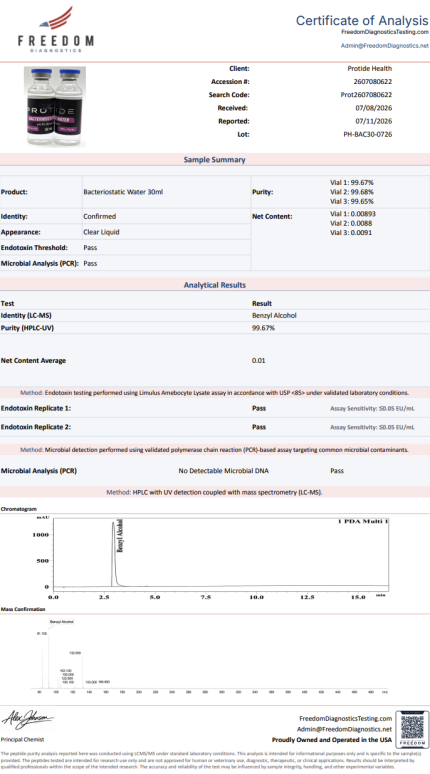
Bacteriostatic Water (0.9% Benzyl Alcohol)
Price range: $14.99 through $18.99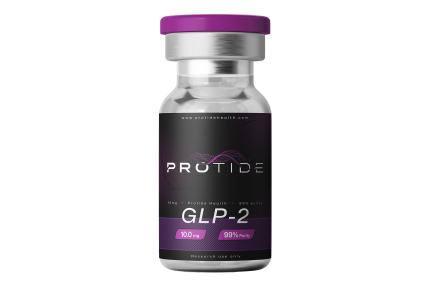
GLP-2
Price range: $110.00 through $400.00
Reviews
There are no reviews yet.